Category
Air Flow Switches for Fan Proving
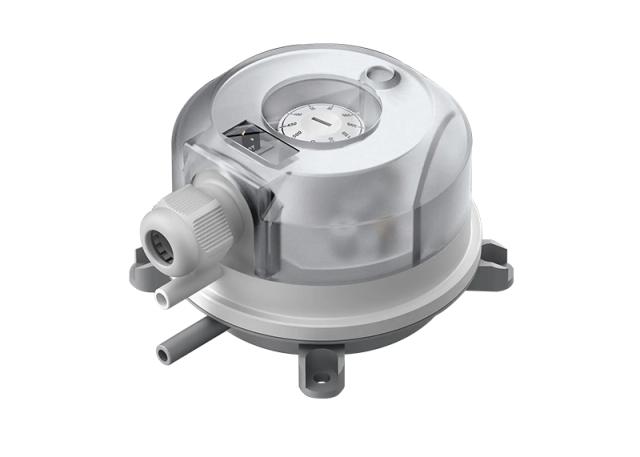
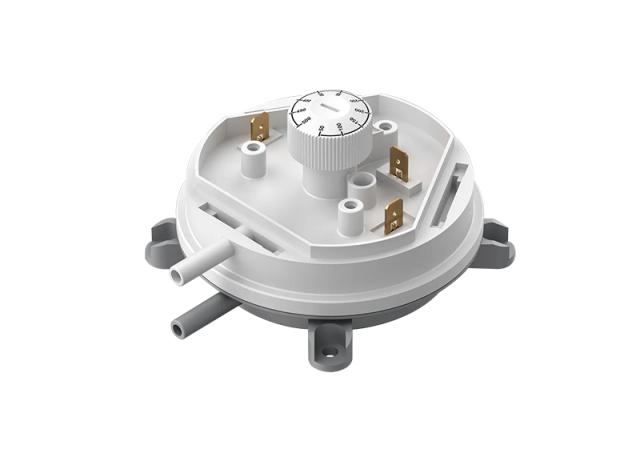
Confirm airflow in ducts and fans, and raise an alarm when it fails, with the adjustable Beck 930 air flow switch.
An air flow switch gives a simple on or off contact when air movement in a duct or across a fan crosses a set differential pressure, without needing a display or a controller. The Beck 930 is adjustable from 20 to 5,000 Pa on a scaled knob, for air and non-combustible, non-aggressive gases, in IP54 or IP65 enclosures.
1 Product · Air Flow Switch
Selection guide
Air Flow Switches for Fan Proving Guide
How an air flow switch works
The Beck 930 doesn't measure air speed directly. It senses the differential pressure that moving air creates across a fan, filter or duct restriction, and trips a contact when that pressure crosses the set point you dial in. Because it needs no pressure gauge to set up, it's fitted mainly as a proving or interlock device rather than a monitoring instrument: it tells you air is moving, not exactly how fast.
How to choose an air flow switch
- Set point: the 930 covers 20 to 5,000 Pa on a single scaled knob, so you can set a low trip for a weak extract fan or a high trip for a pressurised duct without a separate gauge.
- Application: use it for fan proving on AHUs and extract fans, interlocks ahead of duct heaters or burners, and fume hood or kitchen extract alarms, wherever a lost fan belt or blocked filter needs to stop or alarm downstream equipment.
- Gas compatibility: it's rated for air and non-combustible, non-aggressive gases only. For flammable gases or hazardous areas, you need an ATEX-rated switch instead.
- Enclosure: choose IP54 for a general plant room, or IP65 with the cover fitted for washdown or outdoor duct locations.
- Durability: the contact is rated for over 10⁶ switching operations, which suits frequent fan cycling rather than a one-off commissioning check.
For a continuous velocity reading instead of a simple contact, see air flow and velocity transmitters.
FAQ
Common questions
What is an air flow switch used for?
It gives a proving signal that a fan is running or air is moving, by sensing differential pressure across the duct or fan and tripping a contact at a set point. Typical jobs are fan proving interlocks, duct heater and burner safety circuits, and fume hood or kitchen extract alarms.
How do I set the trip point on the Beck 930?
You turn the scaled knob to the pressure you want, from 20 to 5,000 Pa, with no separate pressure gauge needed. The scale reads directly in the switch's working units, so commissioning is a single adjustment rather than a calibration procedure.
Can an air flow switch be used on combustible gas ducts?
The standard Beck 930 is rated for air and non-combustible, non-aggressive gases only. For flammable gas or dust atmospheres, you need a switch with ATEX certification for the relevant zone, which is a different model from this general-purpose one.
What's the difference between an air flow switch and a transmitter?
A flow switch gives one on or off contact at a fixed set point, useful for proving or interlocks. A transmitter gives a continuous 4 to 20 mA or 0 to 10 V signal so a BMS or PLC can display and trend the actual velocity or flow, which a switch can't provide.
How many switching operations does the Beck 930 handle?
It's rated for over 10⁶ operations, so it holds up under frequent fan starts and stops rather than degrading after occasional use. That makes it suitable for fans that cycle often, such as intermittent extract systems, rather than only continuously running plant.
Need help?
Can't find what you need?
Our team helps you select the right air flow switch products for your application. Request a quote or discuss your requirements.
Expert product guidance
Tailored selection of air flow switch instruments
Custom solutions
Instruments customized for your specific industrial setup
Trusted global brands
Full warranty and official documentation support