Category
ATEX Vibration Sensors for Machines
Protect fans, pumps and motors in hazardous areas with Hauber-Elektronik ATEX vibration sensors.
An ATEX vibration sensor monitors fans, pumps, compressors and motors in hazardous areas, where a failing bearing is also an ignition risk. Hauber-Elektronik's HE100 to HE255 series carry ATEX, IECEx and EACEx approvals for Zones 1, 2, 21 and 22, in intrinsically safe, Ex d and Ex tb versions with outputs from switching contacts to 4 to 20 mA.
8 Products · ATEX Vibration Sensor
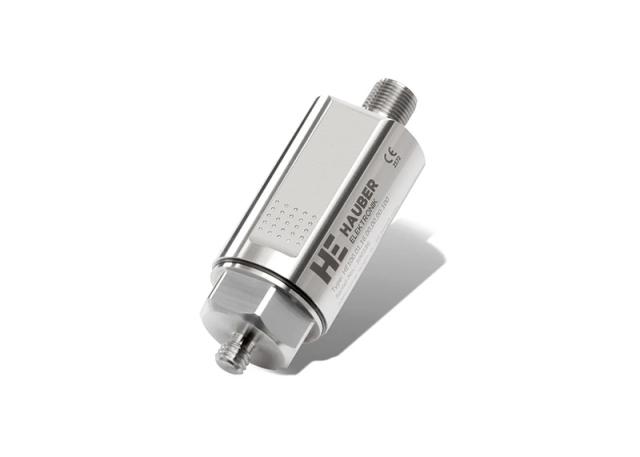
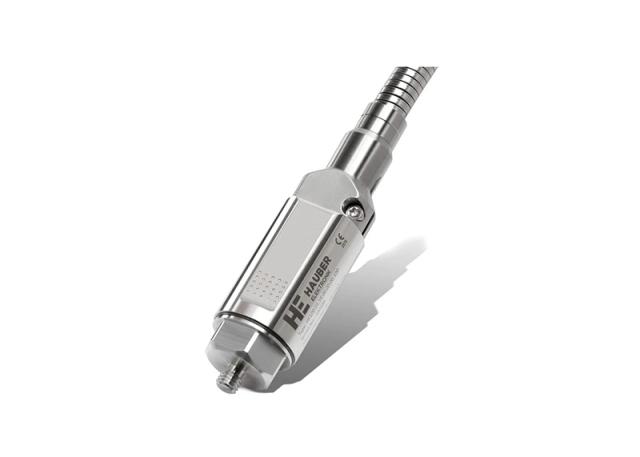
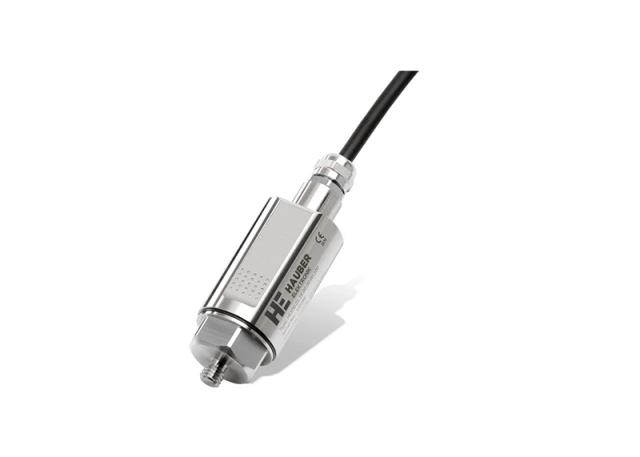
ATEX Vibration Sensor HE100 Series
ATEX Vibration Sensor HE101 Series
ATEX Vibration Sensor HE102 Series
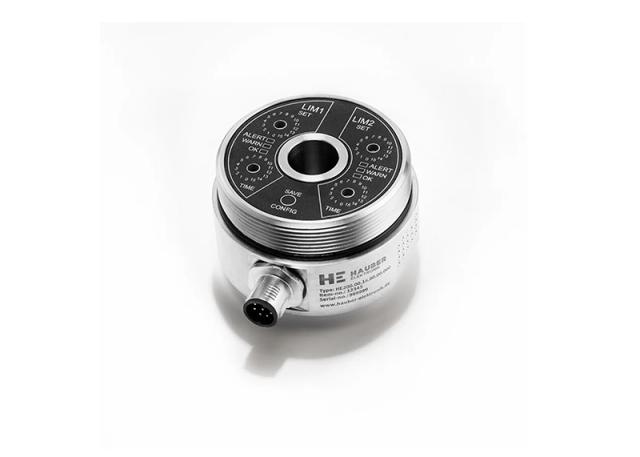
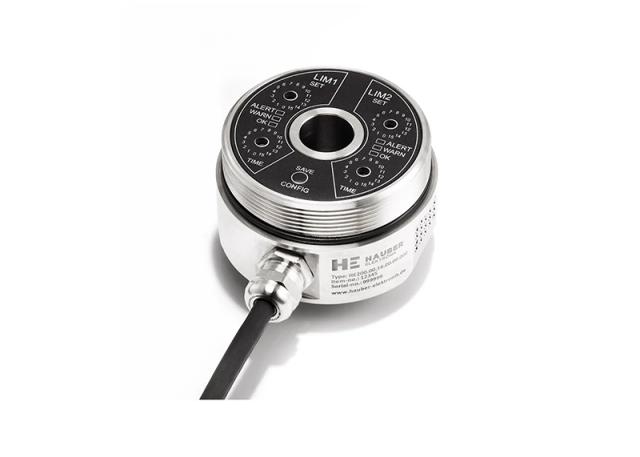
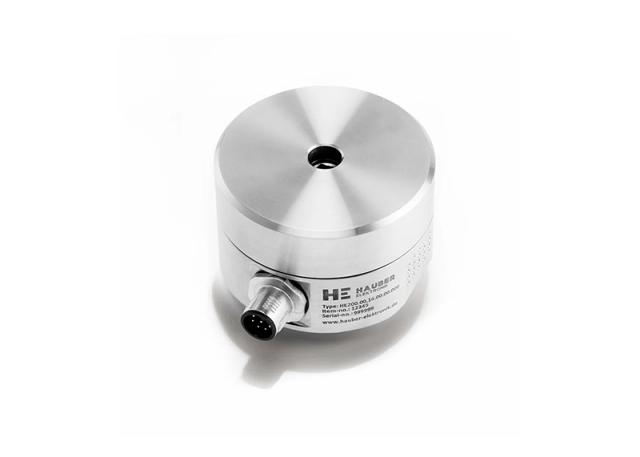
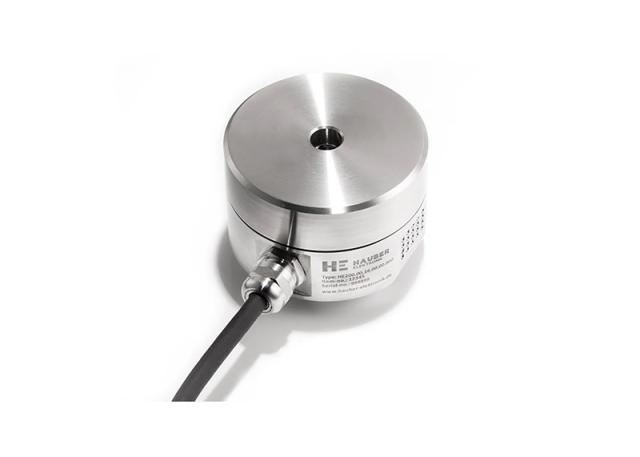
ATEX Vibration Sensor HE200 Series
ATEX Vibration Sensor HE205 Series
ATEX Vibration Sensor HE250 Series
ATEX Vibration Sensor HE255 Series
ATEX vibration sensor HE103 series
Selection guide
ATEX Vibration Sensors for Machines Guide
How an ATEX vibration sensor works
An accelerometer inside the sensor measures the machine's vibration and converts it into an electrical signal, either a switching contact at a set threshold or a continuous 4 to 20 mA output proportional to the vibration level. In a hazardous area, the sensor housing and any cable entry must be certified for the zone, since the accelerometer sits directly on rotating equipment that could itself be an ignition source if it overheats or fails.
How to choose an ATEX vibration sensor
- Basic monitoring: the HE100, HE101 and HE103 monitor to DIN ISO 10816, in intrinsically safe Ex ib (M12 connector) or Ex d and Ex tb (integrated cable) versions for Zone 1 / 21; the HE101 adds bearing temperature and the HE103 has a 60 s averaging time.
- Continuous output: the HE102 gives 4 to 20 mA across Zones 1, 2, 21 and 22.
- Machine tripping: the HE200 and HE205 add two potential-free switching contacts plus 4 to 20 mA; the HE205 measures acceleration.
- Bearing diagnosis: the HE250 and HE255 add a bearing condition parameter to DIN ISO 13373-3, with two 4 to 20 mA outputs, for early rolling bearing fault detection.
Typical uses
- Applications: fans, pumps, compressors and motors in refineries, chemical plants, pharma and coal handling.
- Non-hazardous areas: see Vibration Sensors for Machines.
FAQ
Common questions
Which approvals do the Hauber ATEX vibration sensors carry?
ATEX, IECEx and EACEx, for Zones 1, 2, 21 and 22 depending on the model. The HE100, HE101 and HE103 cover Zone 1 and 21 in intrinsically safe or flameproof versions, while the HE102 extends to Zones 2 and 22 as well.
Can an ATEX vibration sensor detect bearing damage before it fails?
Yes. The HE250 and HE255 generate a bearing condition parameter for rolling bearing diagnosis to DIN ISO 13373-3, alongside overall vibration, giving an earlier warning of developing bearing wear than vibration level alone.
Can the sensor trip the machine automatically?
Yes. The HE200 and HE205 series have two potential-free switching contacts as well as a 4 to 20 mA output, so they can drive an alarm or a trip relay directly, in addition to feeding a continuous reading to a control system.
What's the difference between the intrinsically safe and Ex d versions?
The intrinsically safe Ex ib versions limit the circuit's electrical energy and connect through an M12 connector to a barrier or isolator. The Ex d and Ex tb versions instead contain any internal fault inside a flameproof enclosure, with the cable entry built into the housing.
Which model measures bearing temperature as well as vibration?
The HE101 adds bearing temperature to its standard vibration monitoring to DIN ISO 10816, useful where a rising temperature trend gives an earlier or complementary warning alongside the vibration signal on the same bearing housing.
Need help?
Can't find what you need?
Our team helps you select the right atex vibration sensor products for your application. Request a quote or discuss your requirements.
Expert product guidance
Tailored selection of atex vibration sensor instruments
Custom solutions
Instruments customized for your specific industrial setup
Trusted global brands
Full warranty and official documentation support