Category
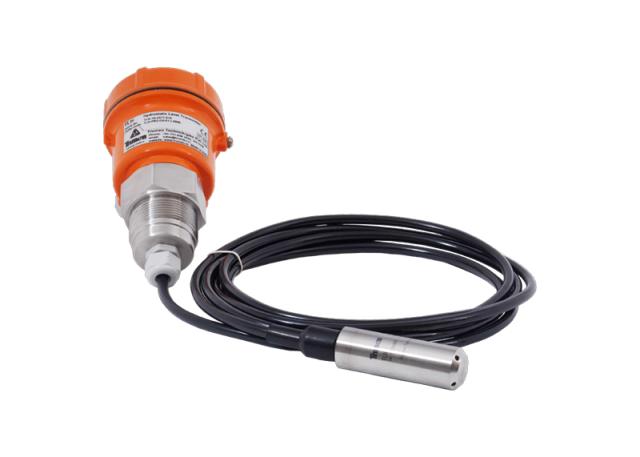
Hydrostatic Level Transmitters
Hydrostatic level transmitters for tanks, wells and reservoirs in process and utility plants.
A hydrostatic level transmitter measures the pressure of the liquid column above it, which rises in direct proportion to depth, to give a simple level reading unaffected by foam, vapour or tank fittings. The Trumen transmitter covers 1 to 200 mH2O; the Beck 981 covers up to 600 mbar, about 6 m of water, for tanks, wells and reservoirs.
2 Products · Hydrostatic Level Transmitter


Selection guide
Hydrostatic Level Transmitters Guide
How a hydrostatic level transmitter works
The sensor sits at, or is lowered to, the bottom of the liquid. Liquid pressure equals density x gravity x height, so the transmitter's pressure sensor converts the pressure it feels directly into a level reading. Because the relationship is linear and unaffected by foam or vapour above the liquid, it stays reliable where an ultrasonic or radar sensor might struggle.
How to choose a hydrostatic level transmitter
- Range: the Trumen transmitter covers 1 mH2O to 200 mH2O; the Beck 981 covers up to 600 mbar, about 6 m of water, for shallower tanks and sumps.
- Accuracy: Trumen offers ±0.2% FSO or ±0.5% FSO depending on model.
- Output: Trumen gives 4 to 20 mA, 0 to 10 V, 0 to 5 V or RS485 Modbus; the Beck 981 gives 4 to 20 mA or 0 to 10 V.
- Liquid density: the reading is calibrated for a specific density, so tell us the liquid (water, effluent, chemical) and we'll set the range correctly.
- Enclosure and installation: the Beck 981 is IP65 for surface or submersible mounting; check cable length against well or tank depth for either transmitter.
For a switch point instead of a continuous reading, see the water level switch. For building water tanks, see the HVAC water level transmitter.
FAQ
Common questions
How does a hydrostatic level transmitter work?
It measures the pressure at the bottom of the liquid column. Since pressure equals liquid density multiplied by gravity and height, the transmitter converts that pressure directly into a level reading. It needs no line of sight and isn't affected by foam, vapour or tank internals, unlike ultrasonic or radar sensors.
Does liquid density affect the level reading?
Yes. The transmitter is calibrated for a specific density, so a reading taken in water won't be correct in a denser chemical or a lighter oil without recalibration. Tell us the liquid you're measuring and we'll set the range and calibration to suit it.
Can a hydrostatic transmitter be used in a borewell?
Yes. It's commonly lowered on a cable into wells, sumps and boreholes to measure water level continuously. The Trumen transmitter covers ranges from 1 to 200 mH2O, which suits most borewell depths, with 4 to 20 mA or Modbus output back to the surface.
What is the difference between the Beck 981 and the Trumen transmitter?
The Beck 981 covers up to 600 mbar, about 6 m of water, and suits shallower tanks and sumps with 4 to 20 mA or 0 to 10 V output. The Trumen transmitter covers a much wider 1 to 200 mH2O range with ±0.2% or ±0.5% FSO accuracy, and adds a Modbus RS485 output for larger or deeper installations.
What accuracy can I expect from a hydrostatic level transmitter?
The Trumen hydrostatic transmitter offers ±0.2% FSO or ±0.5% FSO, depending on the model chosen. Accuracy is stated as a percentage of full-scale output, so it's tighter in absolute terms on a shorter range. Tell us your required range and we'll confirm the achievable accuracy.
Need help?
Can't find what you need?
Our team helps you select the right hydrostatic level transmitter products for your application. Request a quote or discuss your requirements.
Expert product guidance
Tailored selection of hydrostatic level transmitter instruments
Custom solutions
Instruments customized for your specific industrial setup
Trusted global brands
Full warranty and official documentation support