Category
Chute Jam Level Switch for Conveyors
Detect blocked transfer chutes early and stop the conveyor before spillage or belt damage.
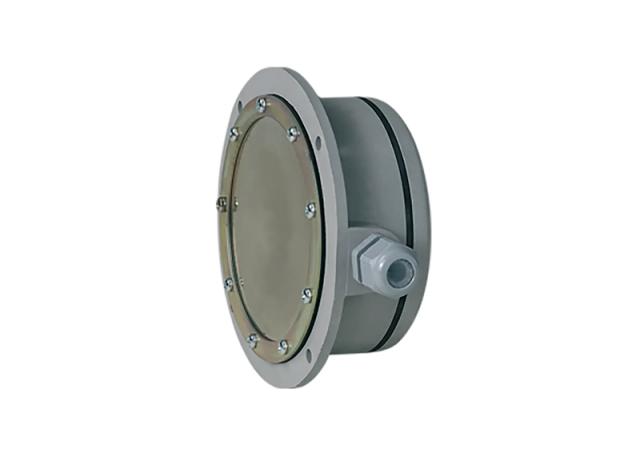
A chute jam switch is a membrane level switch fitted in a transfer chute wall that trips when material backs up and presses on the membrane, so you can stop the feeding conveyor before it spills or overloads the belt. Filsa's switch suits dusty, powdery, granulated and grainy bulk goods and is rated to +0.5 bar.
1 Product · Chute Jam Level Switch
Selection guide
Chute Jam Level Switch for Conveyors Guide
How a chute jam switch works
The switch mounts in the chute wall above the normal material flow. Once a blockage lets material build up to the membrane, material pressure moves it and trips an internal microswitch, giving a single on/off contact that resets as the chute clears. With nothing moving inside the chute to jam or wear, it keeps working in dusty and abrasive material.
How to choose a chute jam switch
- Mounting height: fit it above the normal material profile in the chute, so it only trips once material starts backing up, not during normal flow.
- Material: the standard NBR membrane suits dusty, powdery, granulated and grainy bulk goods; stainless steel 1.4301 is available on request for abrasive materials.
- Protection: IP53 or IP40, depending on the mounting position on the chute.
- Temperature: product temperature -25 to +80 °C.
- Contact rating: a 1 NO + 1 NC contact, 15 A at 250 VAC for resistive loads, enough to stop a conveyor contactor directly or feed a PLC input.
- Vessel pressure: rated to a maximum of +0.5 bar.
For overfill at a screw or chain conveyor discharge instead of a chute, see the overflow switch for screw/chain conveyors. For high-level detection in silos, see pendulum level switches.
FAQ
Common questions
Where should a chute jam switch be installed?
In the chute wall, above the normal material flow line, so it only sees material once the chute starts to fill up from a blockage. Mounted too low, it would trip during normal operation; mounted too high, it would trip too late to stop spillage.
What happens when the chute jam switch trips?
Its contact can stop the upstream conveyor, sound an alarm, or both, before material spills or overloads the belt or drive. The 1 NO + 1 NC contact, rated 15 A at 250 VAC, can drive a conveyor contactor or a PLC input directly.
Can a chute jam switch handle lumpy or abrasive material?
The standard version handles dusty, powdery, granulated and grainy bulk goods with an NBR membrane. For abrasive material, a stainless steel 1.4301 membrane is available on request. Tell us the material and lump size and we'll confirm the right version.
What is the difference between a chute jam switch and an overflow switch?
Both use the same membrane switching principle, but a chute jam switch is fitted in a transfer chute to catch a blockage before it backs up onto the feeding conveyor. An overflow switch is fitted in a screw or chain conveyor casing to catch overfill at the discharge end. Choose based on where the material actually builds up.
What temperature and pressure does the switch tolerate?
Product temperature -25 to +80 °C, and a maximum vessel pressure of +0.5 bar. That covers most cement, mining, power and fertiliser plant chutes at ambient conditions. Tell us if your application runs hotter and we'll check an alternative.
Need help?
Can't find what you need?
Our team helps you select the right chute jam level switch products for your application. Request a quote or discuss your requirements.
Expert product guidance
Tailored selection of chute jam level switch instruments
Custom solutions
Instruments customized for your specific industrial setup
Trusted global brands
Full warranty and official documentation support