Category
Pitot Tubes for Air and Gas Flow
Pitot tubes and averaging flow elements for measuring air and gas flow in ducts and stacks.
A pitot tube measures differential pressure between the air stream and a static point, which a separate transmitter converts into velocity or flow. This page covers Halstrup-Walcher's S-type, standard, averaging and telescoping pitot tubes, plus the Wilson flow grid, for stack, duct and portable measurement across clean and dusty gas streams.
5 Products · Flow Measuring Devices (Pitot Tube)
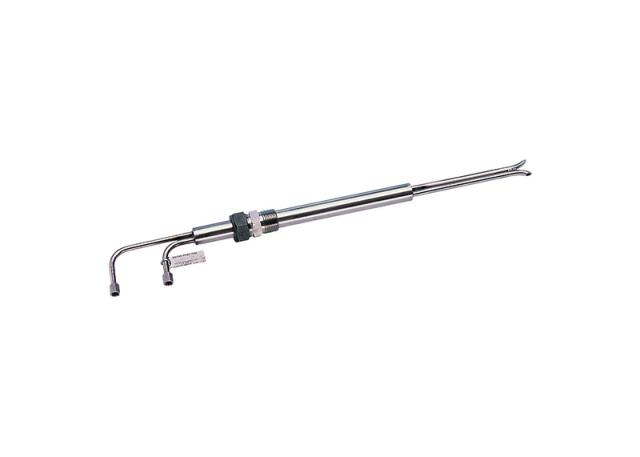
S Type Pitot Tube
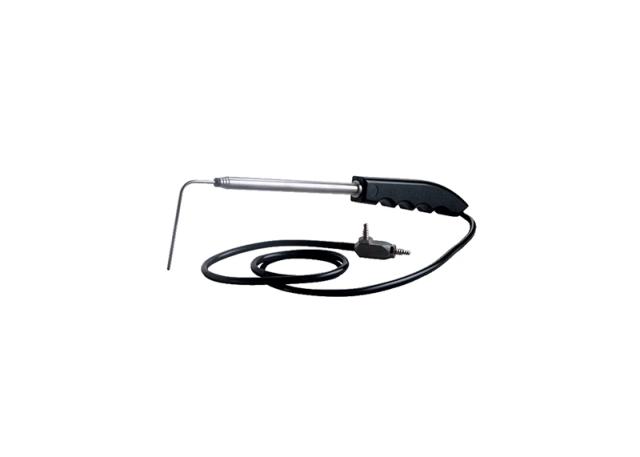
Telescoping Stainless Steel Pitot Tube

Volume Flow Rate Primary Element - Averaging pitot tube

Volume Flow Rate Primary Element Pitot Tube
Volume Flow Rate Primary Element Wilson Flow Grid
Selection guide
Pitot Tubes for Air and Gas Flow Guide
How a pitot tube works
A pitot tube has an opening facing directly into the flow and another sensing the surrounding static pressure. The difference between the two, the dynamic pressure, increases with velocity in a known relationship, so a differential pressure transmitter or manometer connected to the tube can convert that reading into a flow speed. The tube itself has no moving parts and no power supply.
How to choose a pitot tube
- Dust and debris: an S-type pitot tube has larger openings that resist blocking, so it suits stack and flue gas measurements where a standard tube would clog.
- Duct or stack, clean gas: the standard pitot tube suits mobile or stationary use in clean ducts, at lower cost than the S-type or averaging versions.
- Uneven flow profiles: an averaging pitot tube senses at several points across the duct and pairs best with a differential pressure transmitter for volume flow, rather than relying on a single-point reading.
- Portable traverses: a telescoping stainless steel pitot tube adjusts in length, useful for checking velocity at varying depths or duct sizes during commissioning.
- Maximum accuracy, permanent installation: the Wilson flow grid samples the most points across large ducts, for the highest accuracy of the range, at the cost of needing custom sizing per duct.
- Transmitter pairing: none of these tubes gives a reading alone. Pair them with a differential pressure transmitter to get a usable flow or velocity signal.
For a portable gauge to read these tubes on site, see portable air velocity meters.
FAQ
Common questions
What is a pitot tube used for?
It measures the differential pressure created by moving air or gas, which a connected transmitter or manometer converts into velocity or volume flow. It has no moving parts, so it's used across stacks, ducts and portable traverses where a rugged, low-maintenance sensing element is needed.
What is an S-type pitot tube used for?
Its larger sensing openings are less prone to blocking than a standard pitot tube, so it's used for stack and flue gas measurements where dust or particulate would otherwise clog a finer tube. It's a common choice for emission monitoring points on hot, dusty exhaust streams.
What's the difference between an S-type and L-type pitot tube?
An S-type pitot tube has two facing, curved openings that resist blocking in dusty or particulate-laden gas, making it the choice for stacks and flues. An L-type, or standard, pitot tube has finer, straight-through openings suited to clean ducts, where dust build-up isn't a concern.
Why use an averaging pitot tube instead of a single point?
Airflow across a duct is rarely even, especially after a bend or damper, so a single-point reading can miss the true average. An averaging pitot tube senses several points across the duct and combines them, giving a more representative reading for a differential pressure transmitter to convert into volume flow.
Do pitot tubes need a separate transmitter?
Yes. A pitot tube only produces a differential pressure, not a flow reading by itself. You need a differential pressure transmitter or a portable digital gauge, connected by tubing, to convert that pressure into a velocity or volume flow value you can read or log.
How accurate is a Wilson flow grid compared to a pitot tube?
The Wilson flow grid samples more points across the duct than a single or averaging pitot tube, so it gives the highest accuracy of this range for permanent installations in large ducts. It needs custom sizing per duct, unlike a pitot tube, which fits a range of duct sizes with one product.
Need help?
Can't find what you need?
Our team helps you select the right flow measuring devices (pitot tube) products for your application. Request a quote or discuss your requirements.
Expert product guidance
Tailored selection of flow measuring devices (pitot tube) instruments
Custom solutions
Instruments customized for your specific industrial setup
Trusted global brands
Full warranty and official documentation support