Category
Wilson Flow Grid for Large Ducts
Measure average air volume across large ducts and fan inlets.
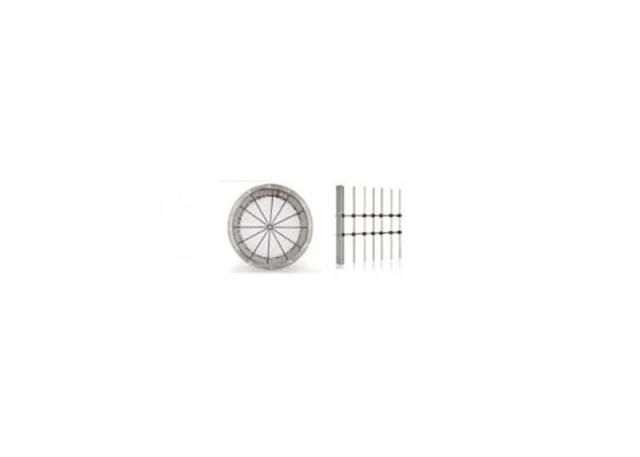
A Wilson flow grid samples total and static pressure at many points across a large duct or fan inlet, giving the highest accuracy from a differential pressure element where a single-point sensor would miss an uneven flow profile. The Halstrup-Walcher grid connects to a differential pressure transmitter, such as the P 26.2, to produce a flow signal.
1 Product · Wilson Flow Grid
Selection guide
Wilson Flow Grid for Large Ducts Guide
What a Wilson flow grid is used for
Airflow across a large duct or fan inlet is rarely even, so a grid instead of a single pitot tube samples the whole cross-section at many points and blends the readings into one averaged differential pressure. That pressure signal needs a separate transmitter to convert it into a usable flow value, in the same way as a smaller averaging pitot tube, but across a wider area and with more sensing points for better accuracy on large sections.
How to choose a Wilson flow grid
- Duct size: it's custom-specified per duct dimensions, so you need to confirm the actual duct size and shape before ordering, rather than picking a standard catalogue size.
- Transmitter pairing: pair it with a differential pressure transmitter, such as the Halstrup-Walcher P 26.2, to get a flow reading. The grid alone only produces a pressure signal.
- Installation type: it's built for large supply or extract ducts in AHUs, fan inlets and fresh air intakes, and process air ducts, where accuracy across a wide cross-section matters more than a low-cost, single-point reading.
- Compatibility: because it's custom sized, it isn't interchangeable with a standard single-point pitot tube if your project changes duct dimensions partway through.
For smaller ducts or where a fixed grid isn't justified, see the pitot tube range, including the averaging pitot tube.
FAQ
Common questions
Why use a Wilson flow grid instead of a pitot tube?
A grid averages many points across the duct, so it stays accurate where a single or even an averaging pitot tube would still miss the true profile in a large section. It's the higher-accuracy option for permanent installations, at the cost of custom sizing rather than a standard tube.
What do I need to run with a Wilson flow grid?
A differential pressure transmitter, such as the Halstrup-Walcher P 26.2, is needed to convert the grid's pressure signal into a usable flow reading. The grid alone only senses averaged pressure across the duct; it doesn't display or output a flow value by itself.
What size ducts does a Wilson flow grid fit?
It's custom-specified per installation rather than sold as a fixed range of sizes, so tell us your duct size and shape and we'll size the grid accordingly. This differs from a pitot tube, which comes in standard sizes that fit a range of ducts without custom manufacture.
Where is a Wilson flow grid typically installed?
Large supply and extract ducts in air handling units, fan inlets, fresh air intakes, and process air ducts where accuracy matters are the typical locations. It suits permanent installations rather than portable or spot-check measurement, where a handheld meter with a pitot tube is more practical.
Need help?
Can't find what you need?
Our team helps you select the right wilson flow grid products for your application. Request a quote or discuss your requirements.
Expert product guidance
Tailored selection of wilson flow grid instruments
Custom solutions
Instruments customized for your specific industrial setup
Trusted global brands
Full warranty and official documentation support