Category
Free & Residual Chlorine Analyzers
Measure free chlorine, total chlorine and chlorine dioxide with Chemitec S494 N sensors and transmitters.
A residual chlorine analyzer monitors how much disinfectant is left in water, and the right sensor depends on which chlorine you're tracking: free (the active disinfectant), total (free plus chloramines) or chlorine dioxide, a separate compound. Chemitec S494 N sensors cover 0 to 2 up to 0 to 2000 ppm, with Series 46 transmitters for dosing control.
4 Products · Chlorine Analyzer

Selection guide
Free & Residual Chlorine Analyzers Guide
How a residual chlorine analyzer works
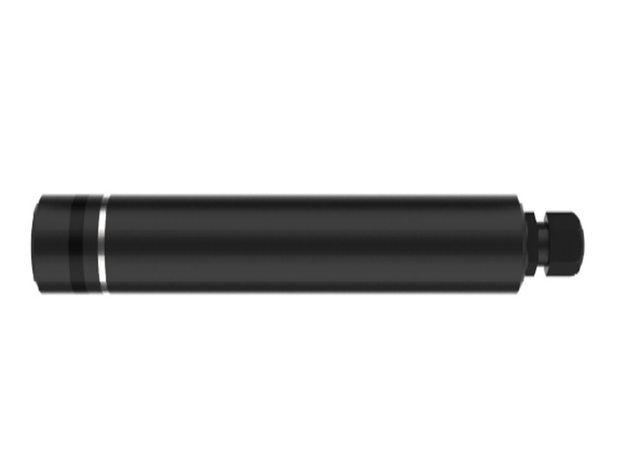
The S494 N sensor is a membrane amperometric probe: chlorine diffuses through a microporous membrane and reacts at an internal electrode, generating a current proportional to concentration. A built-in temperature sensor compensates automatically, since the reaction rate changes with temperature. Because it's membrane-based, the reading also depends on pH and conductivity, so the sensor is specified for pH 4 to 10 and conductivity 100 to 63,000 µS/cm, and readings outside that window need a pH-compensated version or sample conditioning.
How to choose a chlorine analyzer
- Which chlorine: free chlorine is the active disinfectant; total chlorine adds the combined chloramines, relevant where ammonia is present; chlorine dioxide is a separate disinfectant used in water and food processing and needs its own sensor.
- Range: drinking water usually needs a low range, such as 0 to 2 ppm, while process and CIP applications need a higher range, up to 0 to 2000 ppm depending on the sensor version.
- Water chemistry: confirm your sample's pH (4 to 10) and conductivity (100 to 63,000 µS/cm) fall within the sensor's working window before ordering.
- Pressure and temperature: the sensor takes 0 to 3 bar with no pressure pulses, and 0 to 45 °C as standard, extendable to 70 °C on request.
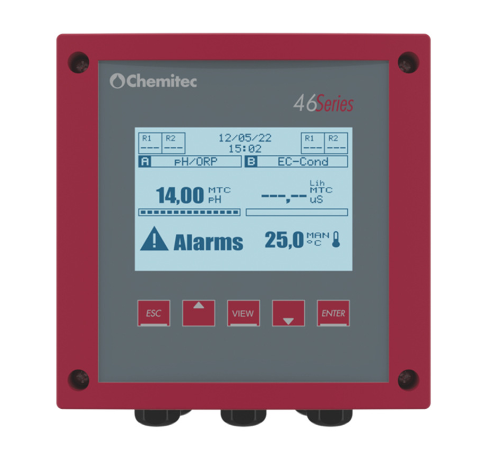
- Controller: the Series 46 transmitter displays the reading, raises alarms and drives a dosing pump, and can add a second parameter such as pH on the same unit.
For other disinfectants, see Ozone Analyzer, Hydrogen Peroxide Analyser and Peracetic Acid Analyzer.
FAQ
Common questions
What's the difference between free and total chlorine?
Free chlorine is the active disinfectant available to kill pathogens. Total chlorine is free chlorine plus combined chlorine, mainly chloramines formed when chlorine reacts with ammonia. Drinking water plants usually track free chlorine, while some wastewater or industrial sites need total chlorine as well.
Is chlorine dioxide measured the same way as free chlorine?
No, it needs a separate sensor. Chlorine dioxide is a different compound to free or total chlorine, used as its own disinfectant in water and food processing. The Chemitec S494 N range includes a dedicated chlorine dioxide version alongside the free and total chlorine sensors.
What residual chlorine range do I need?
Drinking water usually needs a low range, such as 0 to 2 ppm, to track disinfection without overdosing. Process, CIP and higher-demand applications typically need a higher range, up to 0 to 2000 ppm depending on the sensor version. Tell us your application and we'll select the right one.
Does water pH affect the chlorine reading?
Yes. The S494 N works across pH 4 to 10, but accuracy depends on how far your sample sits within that window, and the exact limits vary by sensor version. Tell us your process pH range so we can confirm the right sensor and any conditioning needed.
Can one transmitter control chlorine dosing automatically?
Yes. The Series 46 transmitter displays the reading, raises high and low alarms, and drives a dosing pump directly to hold the residual at your set point, reducing manual dosing checks.
Does high conductivity or low-conductivity water affect the sensor?
The S494 N is specified for conductivity between 100 and 63,000 µS/cm. Outside that range, the membrane sensor's reading can become unreliable, so very pure or very concentrated water may need sample conditioning; tell us your conductivity and we'll confirm suitability.
Need help?
Can't find what you need?
Our team helps you select the right chlorine analyzer products for your application. Request a quote or discuss your requirements.
Expert product guidance
Tailored selection of chlorine analyzer instruments
Custom solutions
Instruments customized for your specific industrial setup
Trusted global brands
Full warranty and official documentation support