Category
Vibration Sensors for Machines
Vibration sensors and meters to protect fans, pumps, motors and other rotating machines.
A vibration sensor measures how much a rotating machine shakes, so unbalance, misalignment, loose mountings and worn bearings show up as a rising trend before they cause a breakdown. This page covers the Hauber-Elektronik range: simple two-wire sensors, IO-Link units and models with switching outputs, built to DIN ISO 10816/20816. For displacement on vibrating screens, see stroke sensors.
11 Products · Vibration Sensors
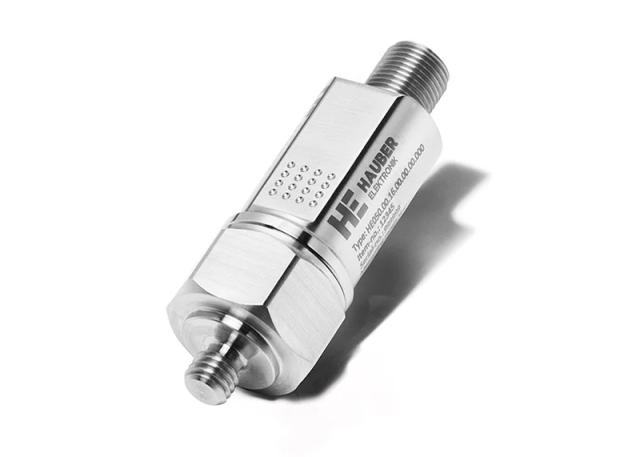
HE050 Series
Vibration monitoring sensor, IO-Link or analogue output, configurable frequency range
HE050-A40 Series
Stroke monitoring sensor, analogue or digital output, configurable frequency range
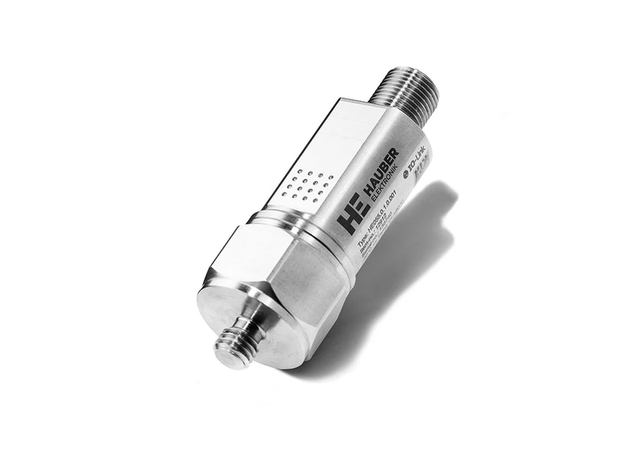
HE055
IO-Link vibration sensor, velocity/acceleration to DIN ISO 10816, up to 12 kHz
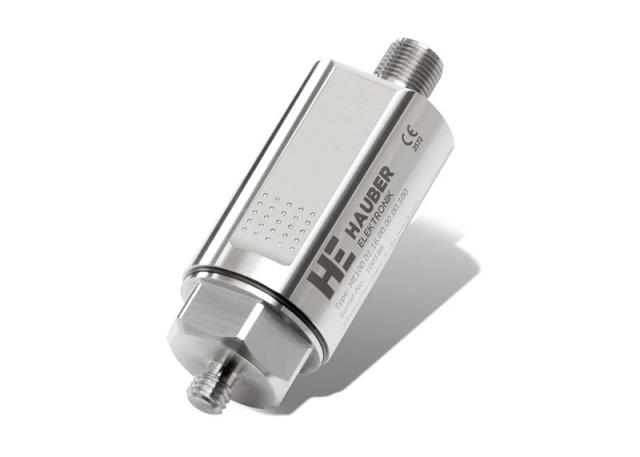
HE090
Two-wire vibration velocity sensor, DIN ISO 10816/20816, -40 to 125°C, IP66/67
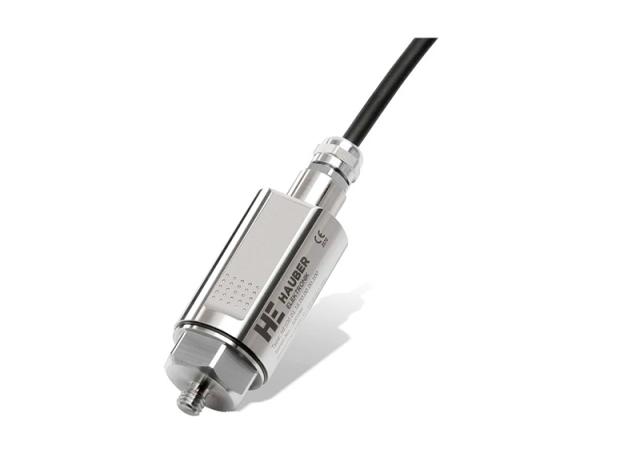
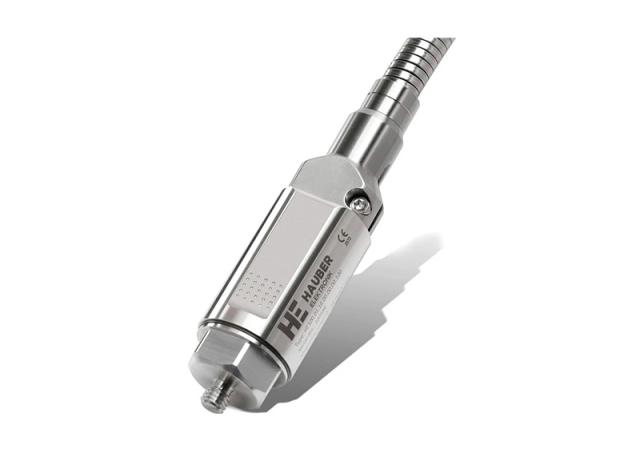
HE100 Series
Two-wire vibration monitoring unit, DIN ISO 2954, CE/ATEX/EAC/UL approved
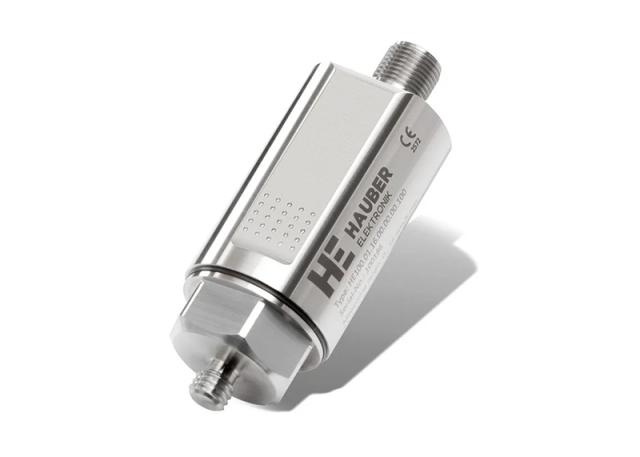
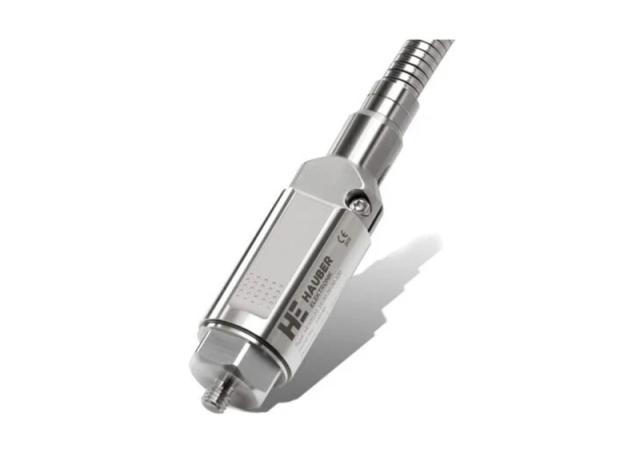
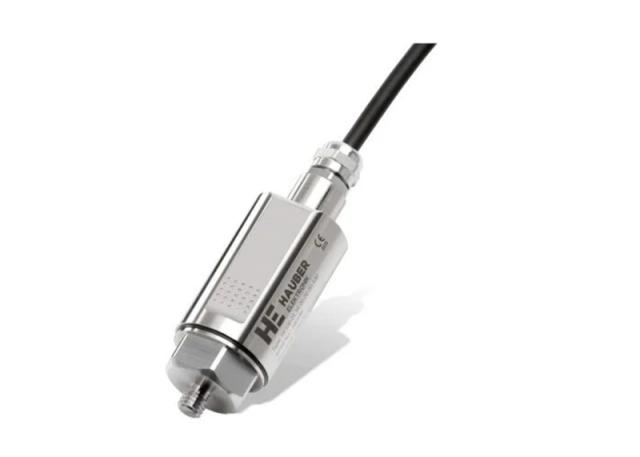
HE101 Vibration Sensor
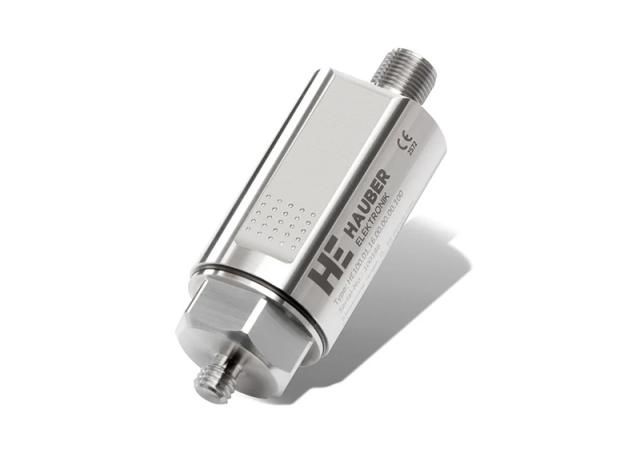
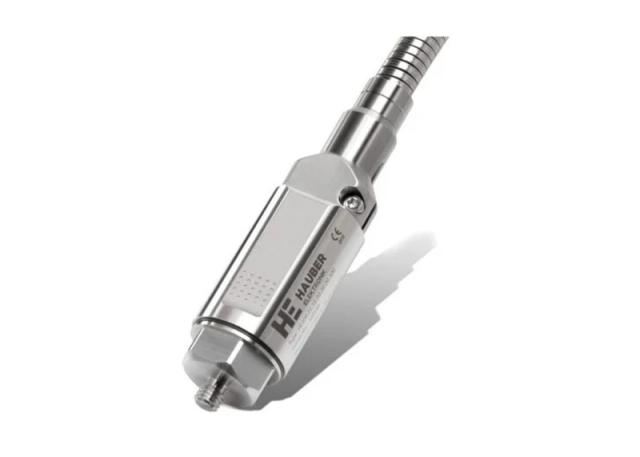
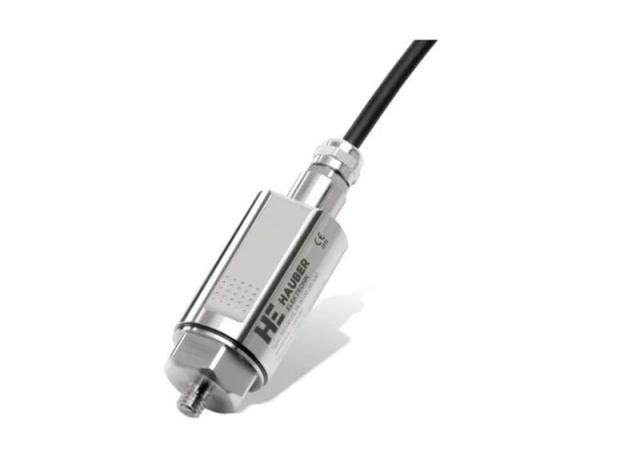
HE102 Vibration Sensor
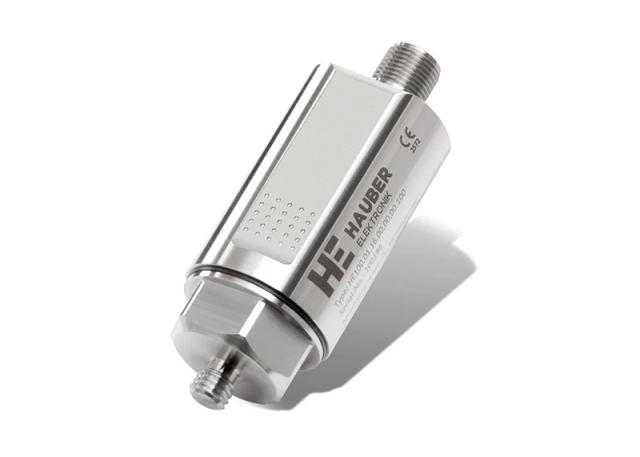
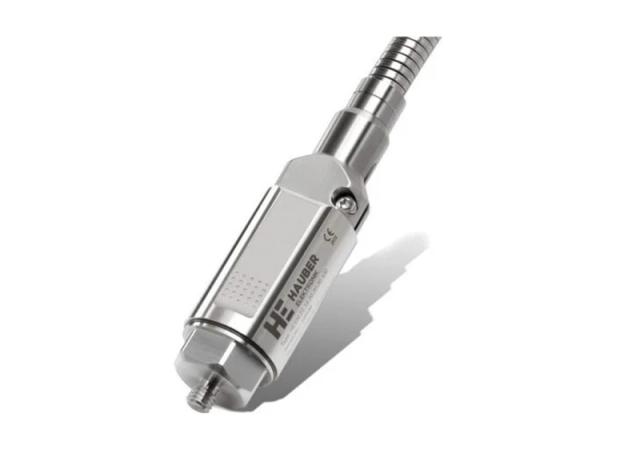
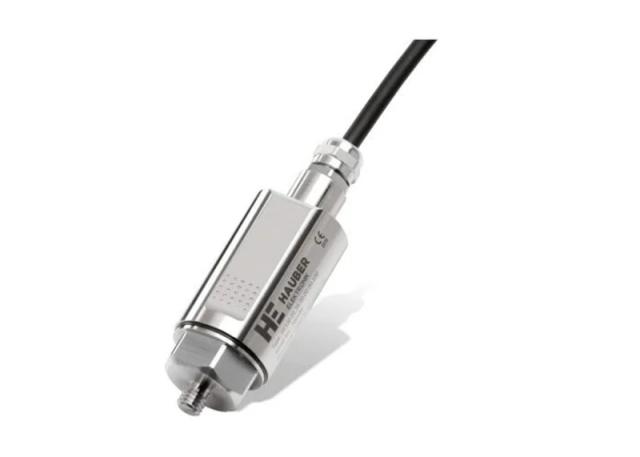
HE103 Vibration Sensor
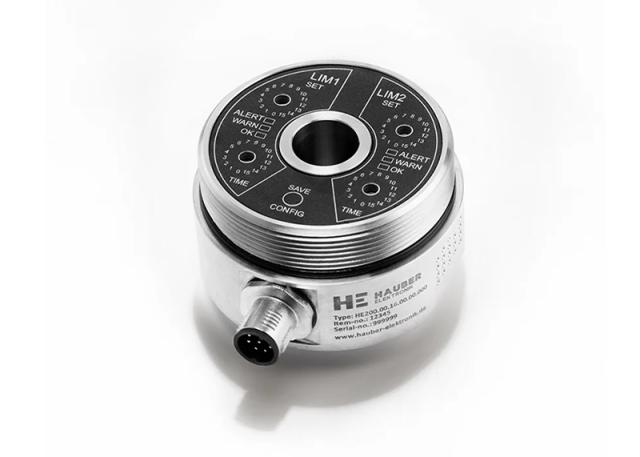
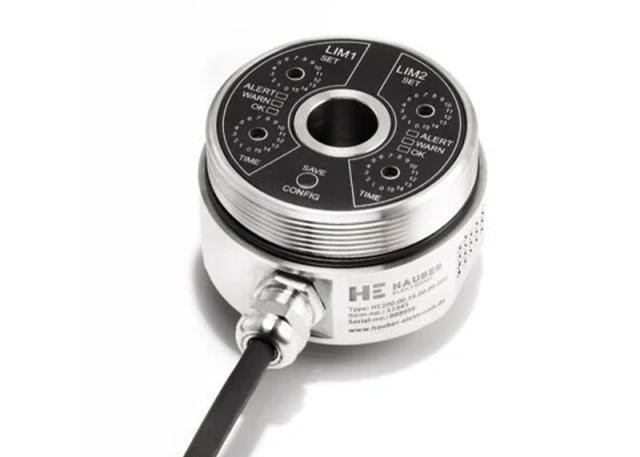
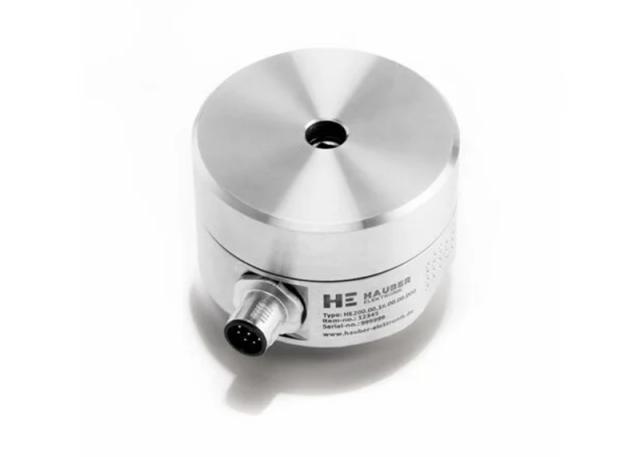
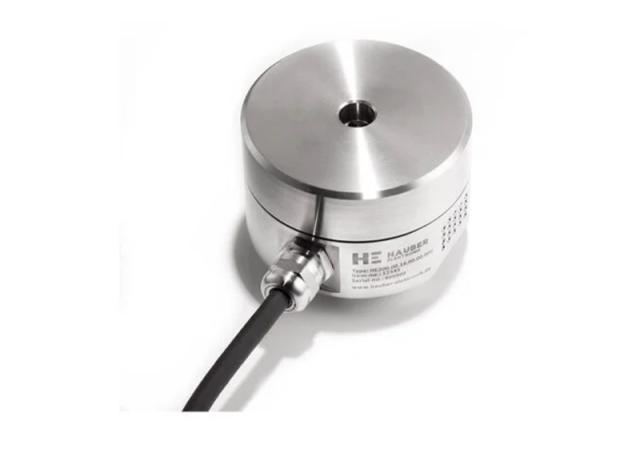
HE200 Vibration Sensor
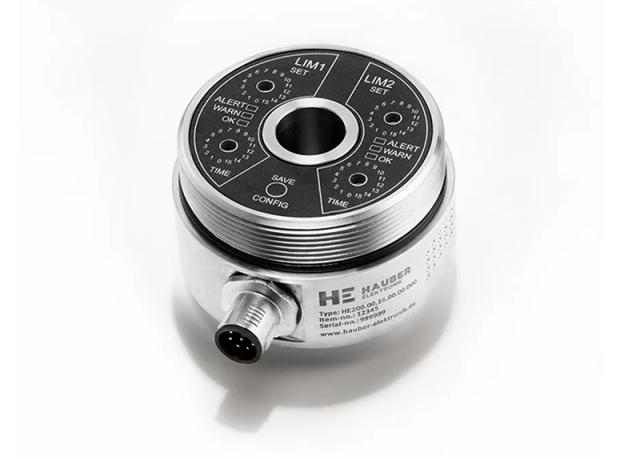
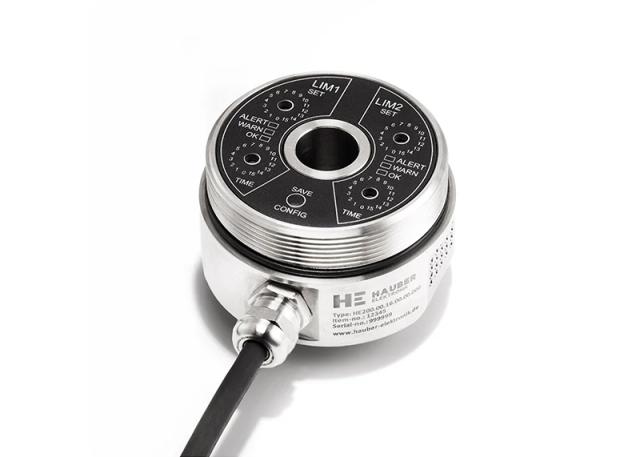
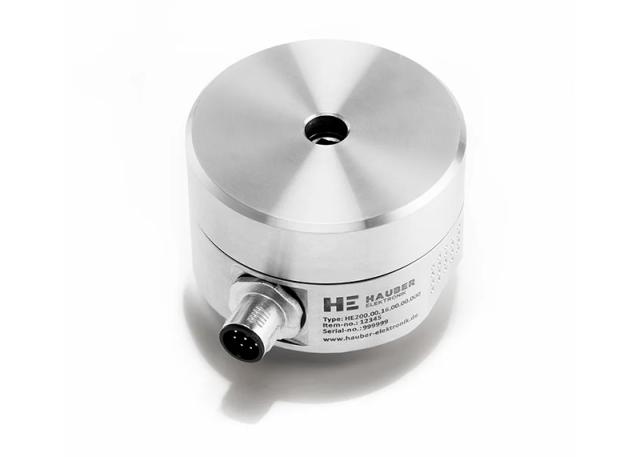
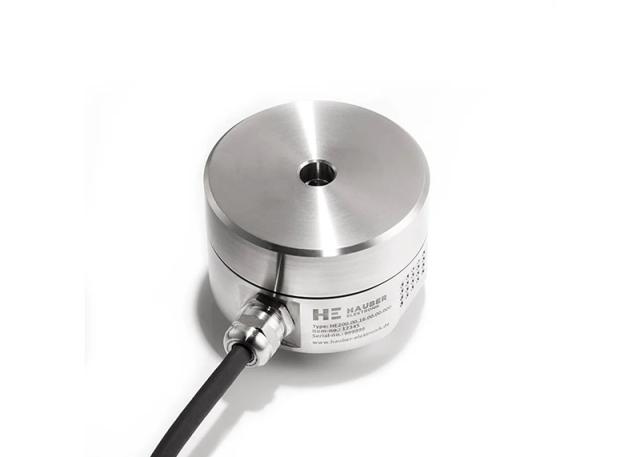
HE205 Vibration Sensor
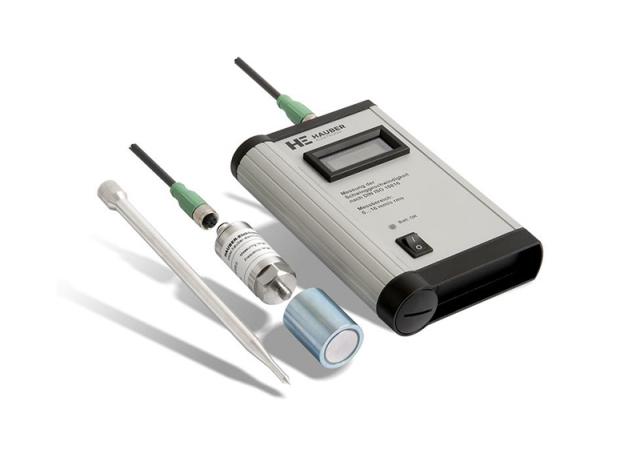
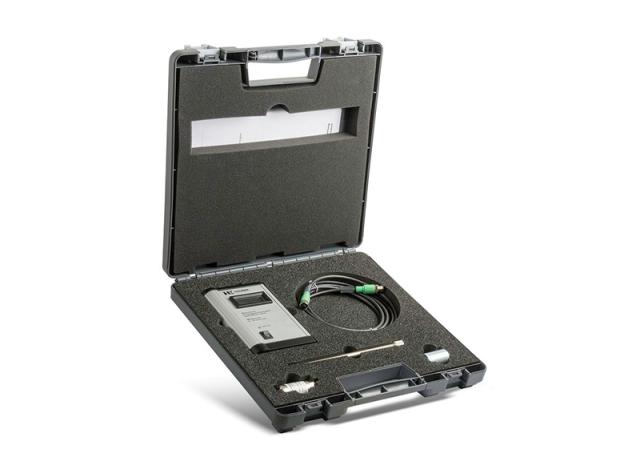
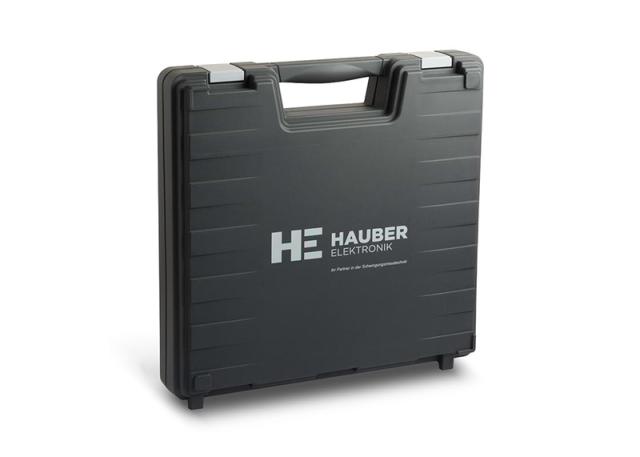
Portable Vibration Meter
Selection guide
Vibration Sensors for Machines Guide
How a vibration sensor works
Almost every mechanical problem in a rotating machine shows up as vibration first, and a sensor mounted on the bearing housing measures how the machine moves and outputs a signal proportional to that motion. DIN ISO 10816 evaluates machine condition from vibration velocity (mm/s rms) measured on non-rotating parts such as bearing housings. Velocity suits general machine condition, while acceleration (g) is better for high-frequency faults such as early bearing damage.
How to choose a vibration sensor
- Simple two-wire monitoring: the HE090 is an essential two-wire sensor, 0 to 25 or 0 to 50 mm/s, built to DIN ISO 10816/20816, rated -40 to 125 °C with IP66/67 protection.
- Configurable IO-Link: the HE050 and HE055 are compact IO-Link sensors, configurable for velocity or acceleration, with the HE055 covering frequencies up to 12 kHz.
- Added temperature: the HE101 adds bearing temperature to the same vibration measurement as the HE100 series.
- 4 to 20 mA output: the HE102 gives a straightforward 4 to 20 mA vibration signal for a PLC analogue input.
- Stable readings on noisy machines: the HE103 uses a 60 s averaging time to reduce the effect of random disturbances.
- Alarms and trips: the HE200 and HE205 add two potential-free switching contacts alongside 4 to 20 mA, with the HE205 measuring acceleration for bearing faults.
- Spot checks: the portable vibration meter reads HE100-series sensors on site without a permanent panel connection.
Need to measure stroke on a vibrating screen or feeder rather than bearing condition? See stroke sensors. For hazardous areas, see the ATEX vibration sensor range.
FAQ
Common questions
What does a vibration sensor actually measure?
It measures how much a machine part moves as it runs, usually as velocity in mm/s or acceleration in g, read from the bearing housing. Rising vibration is often the first sign of unbalance, misalignment, a loose mounting or a worn bearing, well before the fault is audible or causes a breakdown.
What is DIN ISO 10816 and why does it matter for vibration sensors?
It's a standard for evaluating machine condition from vibration velocity, measured in mm/s rms on non-rotating parts such as bearing housings. Hauber sensors like the HE090 and HE055 are built to this standard, so their readings can be compared against its published severity limits for different machine types.
Should I measure vibration velocity or acceleration?
Velocity (mm/s) is the standard choice for general machine condition monitoring and matches DIN ISO 10816. Acceleration (g) responds better to high-frequency faults such as early-stage bearing damage. The HE050 and HE055 are configurable for either, while the HE205 specifically adds acceleration measurement.
Which vibration sensor gives an alarm output as well as a reading?
The HE200 and HE205 both add two potential-free switching contacts to their 4 to 20 mA output, so a machine can trip or alarm locally without waiting on a PLC. The HE205 additionally measures acceleration, useful where early bearing faults are the main concern.
Can a vibration sensor also monitor bearing temperature?
Yes, the HE101 adds bearing temperature measurement to the same vibration monitoring as the HE100 series, giving both readings from one sensor. This suits machines where a temperature rise and a vibration rise together give a stronger early warning than either reading alone.
Is there a portable option for checking vibration without a fixed sensor?
Yes, the portable vibration meter is a handheld unit for taking HE100-series readings on site, useful for spot checks on machines that don't have a permanent sensor installed, or for confirming a fixed sensor's reading during commissioning or a maintenance round.
Need help?
Can't find what you need?
Our team helps you select the right vibration sensors products for your application. Request a quote or discuss your requirements.
Expert product guidance
Tailored selection of vibration sensors instruments
Custom solutions
Instruments customized for your specific industrial setup
Trusted global brands
Full warranty and official documentation support