Category
Boot & Membrane Level Switches
Detect choking in bucket elevator boots early, before it stops your line, with Filsa boot and membrane level switches.
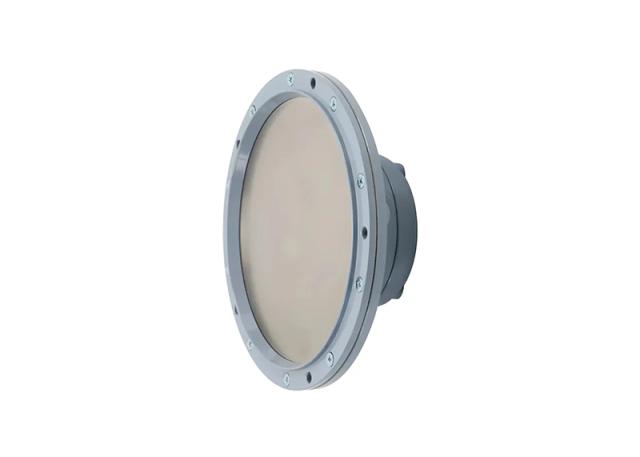
A boot level switch is a membrane level switch that senses bulk solids by pressure on a flexible membrane, with no moving parts inside the vessel to jam or wear. Filsa's reinforced AD version handles dense, abrasive materials up to 200 °C; the CD version suits general powders and granules for minimum or maximum level in silos, bins and hoppers.
2 Products · Boot Level Switch

Selection guide
Boot & Membrane Level Switches Guide
How a membrane level switch works
Process material presses against a flexible membrane mounted in the vessel wall. Once enough material has built up, the membrane moves and trips an internal microswitch; as the level falls, the membrane relaxes and the contact resets. With nothing moving inside the vessel, the switch keeps working in dusty, powdery and granular bulk solids that would jam a mechanical paddle or float.
AD or CD membrane switch?
- Material hardness: choose the AD version, with a reinforced stainless steel 1.4301 membrane, for dense or abrasive bulk solids that would wear a standard membrane quickly. Choose the CD version, with an NBR membrane (stainless steel on request), for general powders, granulated and grainy goods.
- Temperature: AD covers product temperature -20 to +200 °C. CD covers -25 to +80 °C.
- Protection: AD is IP65. CD is IP53 or IP40, depending on mounting position.
- Contact rating: both switch 15 A at 250 VAC on a 1 NO + 1 NC contact, for resistive loads.
- Vessel pressure: both are rated to a maximum of +0.5 bar.
- Mounting point: fit it in the vessel wall at the level to be detected, usually low down for minimum level control.
For dust-hazardous areas, see the ATEX boot level switch. For a tilt-type high-level switch instead, see pendulum level switches.
FAQ
Common questions
Is the boot level switch only for bucket elevator boots?
No. Filsa's datasheet describes it as a general membrane level switch for minimum or maximum level of dense or abrasive bulk solids in silos, bins and hoppers, not a bucket-elevator-specific device. It's commonly fitted in elevator boots, but that's one of several uses. Tell us the vessel and material and we'll confirm the fit.
What is the difference between the AD and CD membrane switch?
The AD version has a reinforced stainless steel 1.4301 membrane for dense or abrasive materials and covers -20 to +200 °C. The CD version has an NBR membrane, covers -25 to +80 °C, and suits general powders and granules. Both switch 15 A at 250 VAC and are rated to +0.5 bar.
How does a membrane level switch differ from a vibrating fork?
A membrane switch has no moving parts inside the vessel: material pressure alone moves the membrane and trips the contact. A vibrating fork has a tuning-fork probe that a control circuit drives and monitors, which detects material by damping rather than direct pressure. Both give a single switch point, but the membrane type suits abrasive solids that would wear a fork.
What is the maximum vessel pressure for a boot level switch?
+0.5 bar, for both the AD and CD versions. That covers the pressure typically found in silos, bins, hoppers and elevator boots at atmospheric ambient pressure. If your vessel runs higher, tell us and we'll check an alternative switch.
Can a boot level switch work in dusty or abrasive material?
Yes. It's designed for dusty, powdery, granulated and grainy bulk goods. Choose the AD version, with its reinforced stainless steel membrane, when the material is dense or abrasive enough to wear a standard membrane, and the CD version for lighter general-purpose duty.
What contact rating does the switch use?
A 1 NO + 1 NC contact rated 15 A at 250 VAC for resistive loads, on both the AD and CD versions. That's enough to drive most relays, alarms and PLC inputs directly, without an interposing relay.
Need help?
Can't find what you need?
Our team helps you select the right boot level switch products for your application. Request a quote or discuss your requirements.
Expert product guidance
Tailored selection of boot level switch instruments
Custom solutions
Instruments customized for your specific industrial setup
Trusted global brands
Full warranty and official documentation support