Category
Cell Growth & Biomass Sensors
Monitor cell growth inline in fermenters and bioreactors with Exner EXcell NIR biomass sensors.
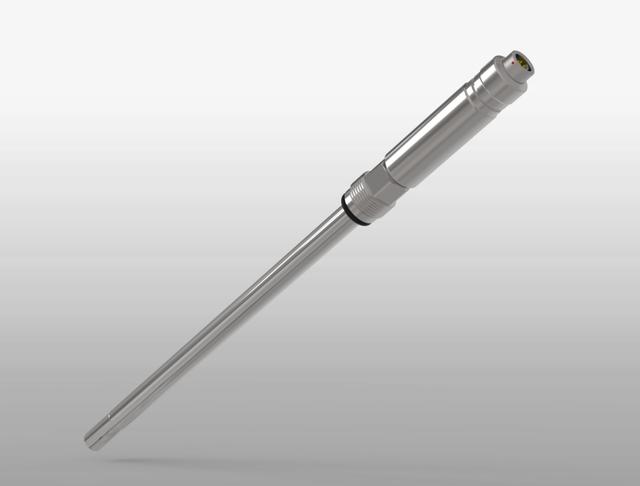
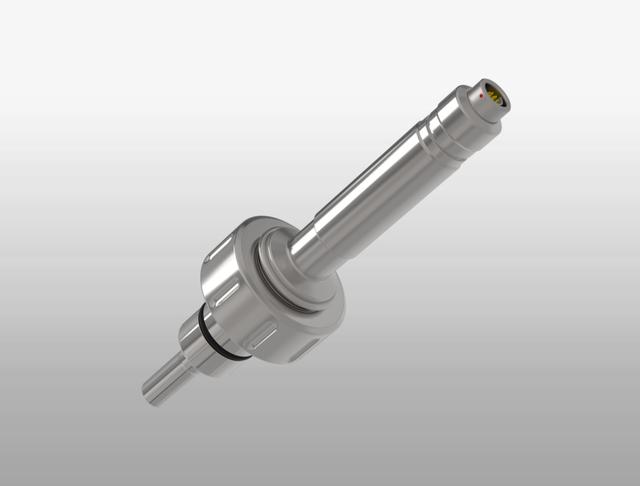
A biomass sensor tracks cell growth inside a fermenter or bioreactor in real time, using near-infrared (NIR) absorbance, so you know when to feed, induce or harvest without pulling a sample. Exner offers four EXcell models: the EXcell 231 and 251 for standard 12 mm ports, and the EXcell 241 and 261 for DN25 weld-in sockets.
4 Products · Cell growth and biomass sensor


Selection guide
Cell Growth & Biomass Sensors Guide
How a biomass sensor works
The EXcell sensor shines an LED light source into the fermentation broth and measures how much near-infrared light scatters back. Denser cell cultures scatter more light, so the reading tracks biomass concentration continuously through the batch. Each sensor has an integrated amplifier, so it outputs directly to a PC or a Modbus RS485 network without a separate transmitter. The EXcell 231 and 241 also offer a 0–20 mA loop, and the 251 and 261 a 4–20 mA loop.
How to choose a biomass sensor
- Port style: the EXcell 231 and 251 fit a standard 12 mm hygienic port; the EXcell 241 and 261 fit a DN25 weld-in socket for larger vessels.
- Range and accuracy: the EXcell 231 and 241 measure 0 to 6 AU (0 to 6600 EBC) at ±1% accuracy, which suits typical fermentation and cell culture density ranges. The EXcell 251 and 261 cover denser cultures, up to 300 g/L of yeast dry weight, at ±1.5% accuracy.
- Length: the 251 has shaft lengths of 120 to 420 mm; the 261 has immersion lengths of 70 or 110 mm. Pick the length that clears your vessel wall and the sensor port.
- Sterilisation: all four are CIP-capable and autoclavable, with wear-free sapphire windows, so they go through the same sterilisation cycle as the vessel.
- Output: all four support USB and Modbus RS485 for a plant SCADA. For a PLC analogue input, the 231 and 241 give 0–20 mA and the 251 and 261 give 4–20 mA, so match the loop type to your input card.
- Maintenance: the LED light source is maintenance-free, so routine upkeep is limited to the standard CIP cycle.
For concentration measurement in downstream bioprocessing, see Refractometers for Bioprocessing.
FAQ
Common questions
What is a biomass sensor used for?
It measures how much cell mass is in a fermenter or bioreactor, continuously and inline, using near-infrared absorbance. Process teams use the trend to decide when to feed, induce production or harvest, instead of relying only on manual samples that risk contamination and add delay.
How does NIR biomass measurement work?
An LED sends near-infrared light into the broth and the sensor measures how much light scatters back. Denser cell cultures scatter more light, so the absorbance reading rises with cell concentration. The EXcell 231 and 241 cover 0 to 6 AU (0 to 6600 EBC) at ±1% accuracy. The EXcell 251 and 261 measure up to 300 g/L of yeast dry weight at ±1.5% accuracy.
Can the sensor be autoclaved?
Yes. All four EXcell models (231, 241, 251 and 261) are autoclavable and CIP-capable, with wear-free sapphire windows that survive repeated sterilisation cycles, so they can be sterilised in place along with the vessel between batches.
Do I need a separate transmitter for the biomass sensor?
No. The amplifier is integrated into every EXcell sensor body, and it outputs directly to a PC or a Modbus RS485 network, or to an analogue loop (0–20 mA on the 231 and 241, 4–20 mA on the 251 and 261). That keeps the installation simpler than a sensor that needs its own external transmitter.
Which EXcell version fits my bioreactor?
Choose by port first. The EXcell 231 and 251 fit a standard 12 mm hygienic port, common on smaller fermenters. The EXcell 241 and 261 fit a DN25 weld-in socket, used on larger vessels. Within each pair the port is the same, so the choice comes down to range: the 231 and 241 cover 0 to 6 AU, while the 251 and 261 are for denser cultures up to 300 g/L.
How is biomass different from turbidity measurement?
Both use scattered or absorbed light, but biomass sensors are tuned and scaled for live cell density in fermentation broths, reporting in AU, EBC or OD. A turbidity sensor targets water clarity in NTU. Use the biomass sensor inside the fermenter and a turbidity sensor for clarified process water.
What is the difference between the EXcell 251 and 261?
Both measure up to 300 g/L of yeast dry weight at ±1.5% and share the same LED and sapphire-window design. The 251 is a 12 mm sensor with a PG13.5 thread and shaft lengths from 120 to 420 mm. The 261 is a DN25 weld-in sensor with 70 or 110 mm immersion, IP68 protection and a maximum process pressure of 16 bar.
Need help?
Can't find what you need?
Our team helps you select the right cell growth and biomass sensor products for your application. Request a quote or discuss your requirements.
Expert product guidance
Tailored selection of cell growth and biomass sensor instruments
Custom solutions
Instruments customized for your specific industrial setup
Trusted global brands
Full warranty and official documentation support