Category
Immersion Fittings for pH Sensors
Mount pH and analysis sensors in open tanks, basins and channels with Exner EXdip immersion fittings.
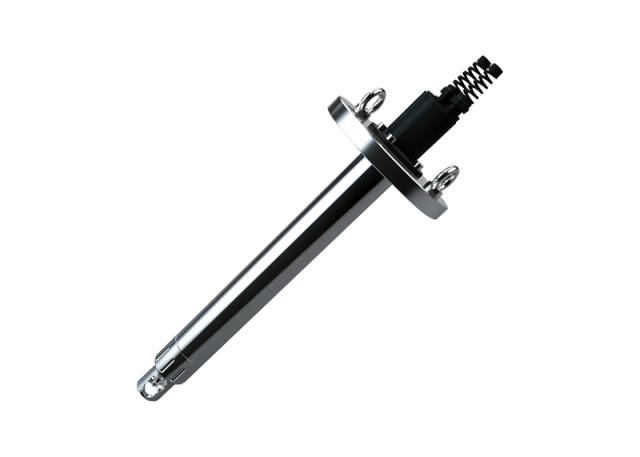
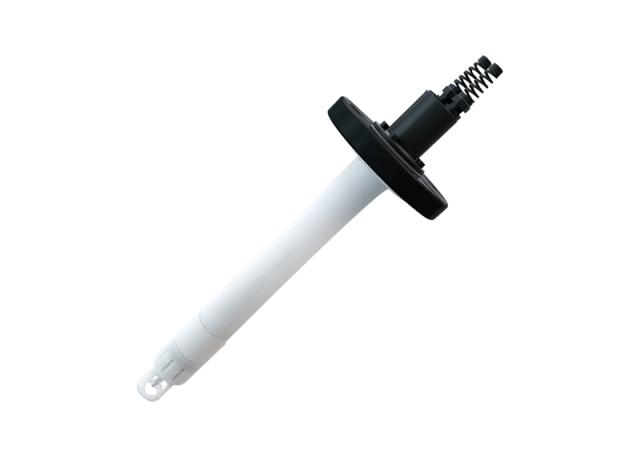
An immersion fitting holds a pH, conductivity or optical sensor at the right depth in an open tank, basin or channel, where there's no pipe to mount into. Exner's EXdip 910 and 920 are DN50 / 2" fittings with an integrated orbital cleaning system, for aeration basins, chemical tanks, channels and sumps.
2 Products · Immersion Fittings
Selection guide
Immersion Fittings for pH Sensors Guide
What an immersion fitting is used for
In open tanks, basins and channels there's no pipe wall to thread a sensor into, so the sensor has to hang in the liquid instead. An immersion fitting holds it at the right depth, protects it from knocks, and keeps it clean with a built-in orbital cleaning system, so fouling doesn't drift the reading between services.
How to choose an immersion fitting
- Material and rating: the EXdip 910 is stainless steel 316L, up to 10 bar and 140 °C. The EXdip 920 is plastic, up to 6 bar and 90 °C, for media that would corrode stainless steel.
- Mounting: both are DN50 / 2" flange fittings; the plastic EXdip 920 can also be suspended from the basin edge, useful where there's no flange to bolt to.
- Cleaning: the integrated orbital system cleans the sensor in place, which matters most in dirty wastewater where fouling is fast.
- Application: aeration and neutralisation basins in ETP and STP, open process and chemical tanks, and channels or sumps, wherever the sensor has to hang in an open body of liquid rather than a closed line.
Not sure if your process needs an open-tank fitting or a pipe mounting? For sensors mounted in a pipe rather than an open vessel, see static probe housings, and tell us the tank or basin depth so we can confirm the right immersion length.
FAQ
Common questions
What is an immersion fitting used for?
It holds a pH, conductivity or optical sensor at a set depth in an open tank, basin or channel, where there's no pipe to mount a sensor into directly. Exner's EXdip range adds an integrated orbital cleaning system so the sensor stays accurate between services.
How does the orbital cleaning system work on an immersion fitting?
It cleans the sensor in place while it's still immersed, reducing the fouling that builds up in dirty wastewater. That cuts how often the sensor has to be pulled out and cleaned by hand, and keeps the reading closer to true between services.
Which immersion fitting suits a wastewater aeration basin?
Either EXdip model works, but the plastic EXdip 920 is often chosen for basins because it can be suspended from the basin edge as well as flange-mounted, and it resists the mild corrosives common in ETP and STP aeration and neutralisation tanks.
Can an immersion fitting be flange-mounted?
Yes. Both the EXdip 910 and EXdip 920 are DN50 / 2" flange fittings. The EXdip 920 adds the option of suspension from the basin edge where a flange connection isn't practical.
Stainless steel or plastic immersion fitting?
Choose the stainless steel EXdip 910 for higher pressure and temperature, up to 10 bar and 140 °C. Choose the plastic EXdip 920 for corrosive media within its lower 6 bar and 90 °C rating, or where you need to suspend it rather than bolt to a flange.
Need help?
Can't find what you need?
Our team helps you select the right immersion fittings products for your application. Request a quote or discuss your requirements.
Expert product guidance
Tailored selection of immersion fittings instruments
Custom solutions
Instruments customized for your specific industrial setup
Trusted global brands
Full warranty and official documentation support