Category
Capacitance Continuous Level Transmitter
Continuous level measurement for water, fuel and utility tanks with the Trumen two-wire capacitance transmitter.
A capacitance level transmitter is a two-wire probe that forms a capacitor with the tank wall, so the reading changes continuously as the liquid rises. The Trumen TLC2 covers water, diesel and edible oil, with a 4 to 20 mA isolated output or 1 to 5 V and 2 to 10 V, and PTFE or ceramic-insulated probes to 300 °C.
1 Product · Capacitance Continuous Level Transmitter
Selection guide
Capacitance Continuous Level Transmitter Guide
How a capacitance level transmitter works
The probe and the (conductive) tank wall act as the two plates of a capacitor, with the liquid as part of the dielectric between them. As the level rises, more of the probe is covered by liquid, so the capacitance changes, and the transmitter's electronics convert that change into a proportional 4 to 20 mA or voltage signal.
How to choose a capacitance level transmitter
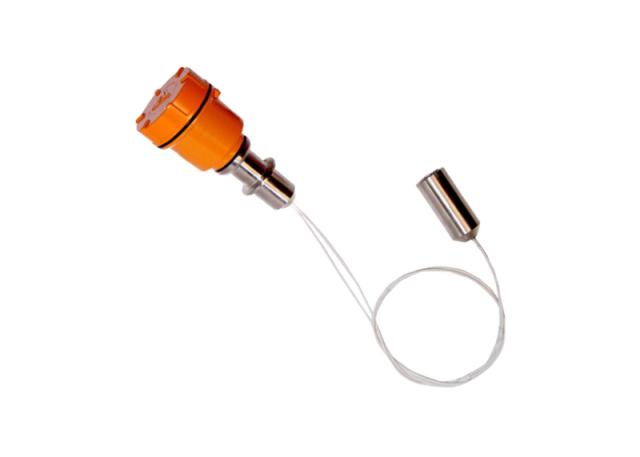
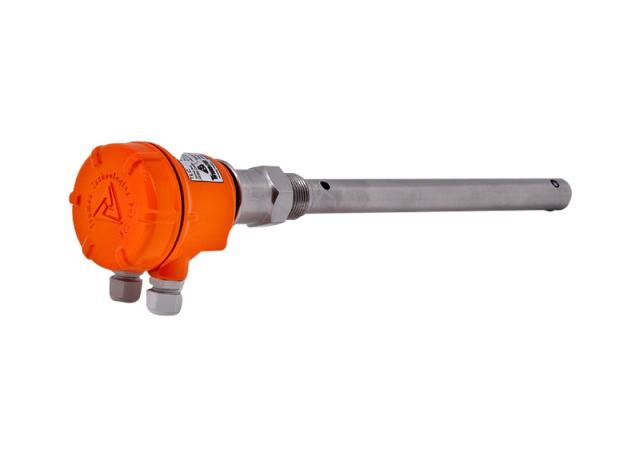
- Probe form: a rigid rod probe (50 to 3,000 mm) suits shorter tanks; a flexible rope probe (100 to 20,000 mm) reaches deep tanks and silos where a rigid rod would be impractical.
- Insulation: PTFE insulation extends the process temperature to 250 °C, and ceramic insulation to 300 °C, above the standard -20 to 100 °C probe.
- Liquid: the TLC2 suits water, diesel and edible oil, so one transmitter type covers a generator's diesel day tank as well as its water storage.
- Pressure rating: the probe handles process pressure up to 20 bar, so it also fits pressurised tanks, not just vented ones.
- Output: choose the 4 to 20 mA isolated output for a standard BMS or PLC input, or 1 to 5 V / 2 to 10 V if your input card needs a voltage signal.
- Sealing: IP67/68 protection suits outdoor or below-grade installations.
Calibration is by DIP switch, so span and zero are set on site without extra software. For non-contact measurement where a probe can't be fitted, see the ultrasonic level transmitter.
FAQ
Common questions
How does a capacitance level transmitter work?
The probe and the tank wall form a capacitor, and the liquid between them acts as part of the dielectric. As the level rises, more of the probe is wetted, the capacitance increases, and the transmitter's electronics scale that change into a 4 to 20 mA or voltage output proportional to level.
Can a capacitance transmitter measure a diesel day tank?
Yes. The Trumen TLC2 suits liquids such as water, diesel and edible oil, so it works equally well on a generator's diesel day tank and a water storage tank. Tell us the liquid and tank depth so we can confirm the probe length and insulation.
What probe length do I need for my tank?
Rigid rod probes run from 50 mm to 3,000 mm, and flexible rope probes from 100 mm to 20,000 mm, so pick a length close to your tank's full depth. A probe that's much longer than needed still works, but a shorter one leaves the top of the tank unmeasured.
How accurate is the Trumen TLC2?
The maximum measured error is ±1 mm, which is precise enough for tank inventory and pump control in most building and utility applications. Accuracy depends on correct calibration for the specific liquid, since capacitance response varies with the liquid's dielectric constant.
How is a capacitance level transmitter calibrated?
Calibration is by DIP switch on the transmitter head, so you set the empty and full points on site without a laptop or separate configuration tool. This keeps commissioning quick, and recalibration is just as easy if the tank's usable range changes later.
Need help?
Can't find what you need?
Our team helps you select the right capacitance continuous level transmitter products for your application. Request a quote or discuss your requirements.
Expert product guidance
Tailored selection of capacitance continuous level transmitter instruments
Custom solutions
Instruments customized for your specific industrial setup
Trusted global brands
Full warranty and official documentation support