Category
Chlorine Analysers for Building Water
Monitor chlorine disinfection in swimming pools, drinking water tanks and building water systems.
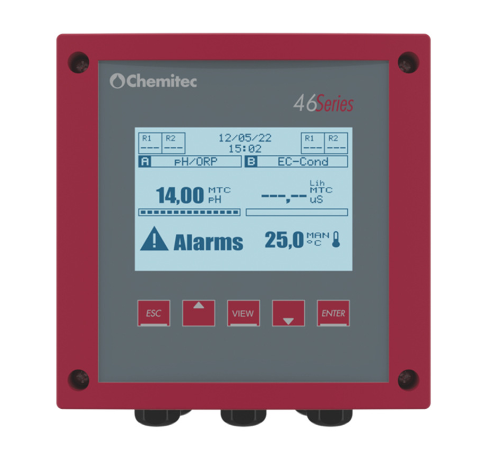
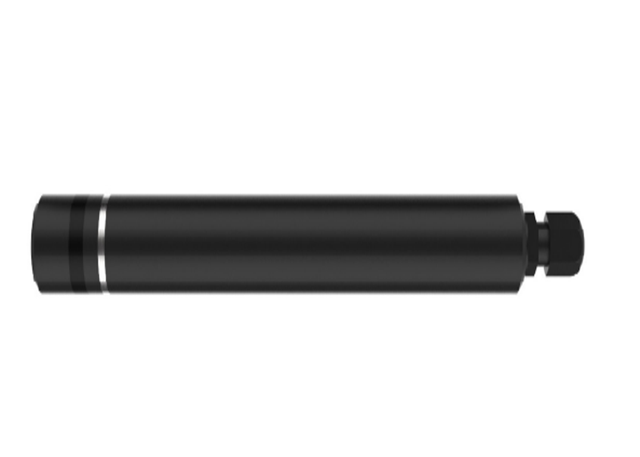
A chlorine analyzer for pools and building water keeps free chlorine at the level needed to disinfect without irritating swimmers or tainting drinking water, and can dose automatically to hold it there. The Chemitec S494N sensor and Series 46 transmitter cover swimming pools, spas, drinking water storage and cooling water disinfection.
2 Products · Chlorine Analyser
Selection guide
Chlorine Analysers for Building Water Guide
What a chlorine analyser is used for
A membrane amperometric probe generates a small current proportional to the free chlorine concentration in the water sample. The S494N sensor reads that current and, paired with a Series 46 transmitter, displays the value, raises alarms if it drifts out of range, and drives a dosing pump to correct it, so the operator doesn't have to test and dose manually.
How to choose a chlorine analyser
- Application: swimming pools and spas need tight control for swimmer comfort and safety; drinking water storage and cooling water disinfection tolerate a wider band but still need confirmation the water is treated.
- Sensor conditions: the S494N operates at pH 4 to 10, 0 to 45 °C and up to 3 bar, and needs a flow rate of 30 to 60 l/h across the membrane to read correctly.
- Second parameter: the Series 46 transmitter can measure pH alongside chlorine from the same unit, useful because pH strongly affects how well chlorine disinfects.
- Maintenance: budget to replace the electrolyte solution every 3 to 6 months and the membrane cap every 6 to 12 months, and check the reading weekly against the DPD1 photometric method.
- Dosing control: the Series 46 has outputs to drive a chlorine dosing pump directly from the measured value.
For process-water chlorine measurement outside buildings, see free and total chlorine analyzers.
FAQ
Common questions
Can one analyser measure chlorine and pH together?
Yes. The Chemitec Series 46 transmitter handles two parameters from one unit, typically free chlorine and pH, which matters because pH strongly affects how well chlorine disinfects. A single-parameter Series 30 is available if only chlorine needs monitoring.
Why does pH matter for pool chlorine?
Free chlorine's disinfecting strength depends on pH: at higher pH, more of it exists in a less active form, so the same chlorine reading can disinfect less effectively. Measuring and controlling pH alongside chlorine, as the Series 46 does, keeps disinfection consistent.
Can the chlorine analyser control a dosing pump?
Yes. The Series 46 transmitter has outputs to control a dosing pump directly from the measured chlorine value, adding chlorine as the level falls rather than relying on a fixed dosing schedule or manual testing.
How often does the chlorine sensor need maintenance?
The S494N's electrolyte solution needs replacing every 3 to 6 months, and the membrane cap every 6 to 12 months, depending on water quality and use. It's also worth checking the reading weekly against the DPD1 photometric reference method to confirm calibration hasn't drifted.
What chlorine range does the S494N cover?
The measuring range steps through 0, 2.5, 5, 10, 20, 200 and 2000 ppm, so it covers everything from tight pool disinfection control up to higher process concentrations. Tell us your expected range and we'll confirm the right configuration.
Need help?
Can't find what you need?
Our team helps you select the right chlorine analyser products for your application. Request a quote or discuss your requirements.
Expert product guidance
Tailored selection of chlorine analyser instruments
Custom solutions
Instruments customized for your specific industrial setup
Trusted global brands
Full warranty and official documentation support