Category
Process & Temperature Controllers
PID, profile and indicating controllers from Shinko and Pixsys for temperature and process control.
A process controller reads a sensor, compares it with a target, and drives a heater, valve or motor to close the gap, keeping the process at its set point. We supply controllers from Shinko and Pixsys: PID controllers for single loops, profile controllers for ramp-and-soak programs, and multi-loop and servo valve controllers for larger systems.
Browse by type
Control Subcategories
8 Products · Control
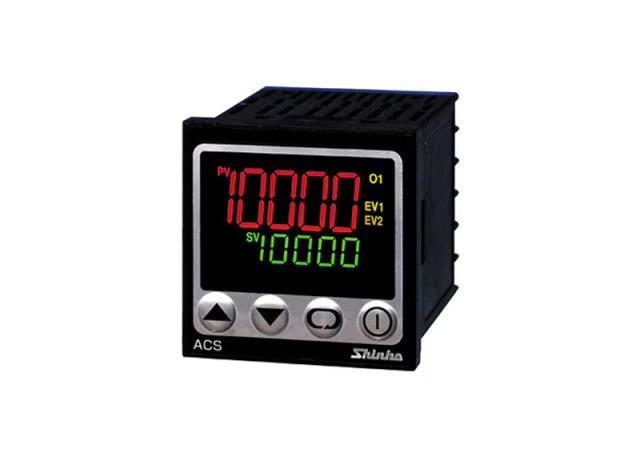
ACS-13A | Digital Indicating Controller
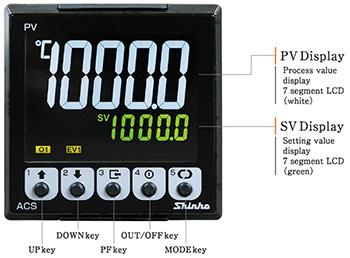
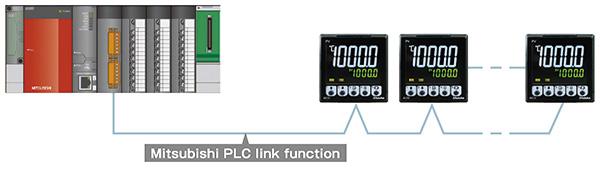
ACS2
48mm square PID controller, dual PV/SV LCD, predictive maintenance, 2 DOF PID
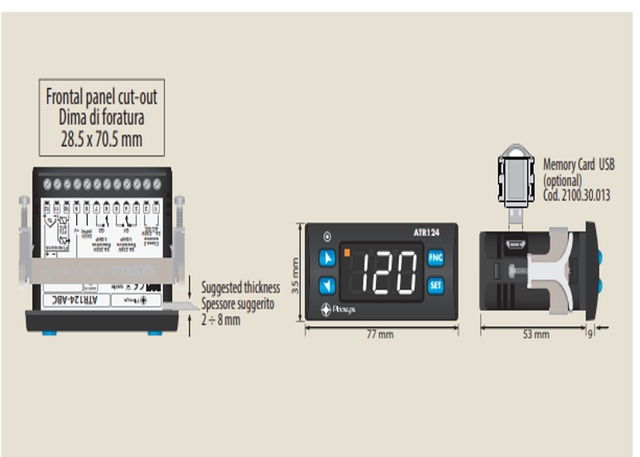
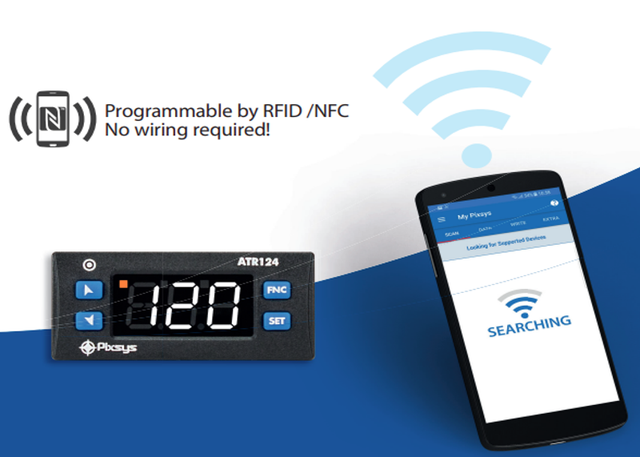
ATR124
Universal PID controller, TC/RTD/mA/V input, dynamic auto-tune, optional RS485
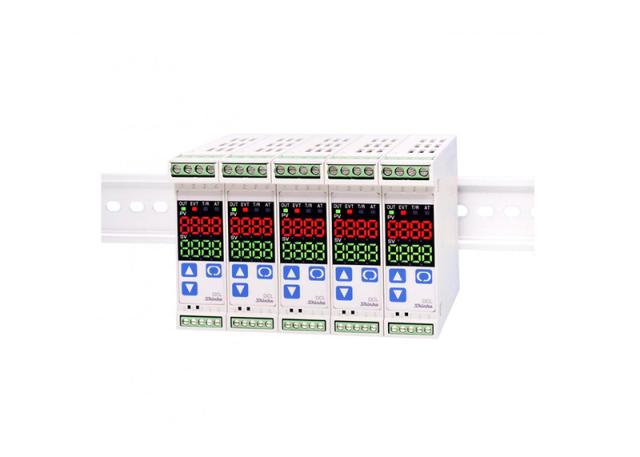
DIN Rail Mounted Indicating Controllers | DCL-33A Series
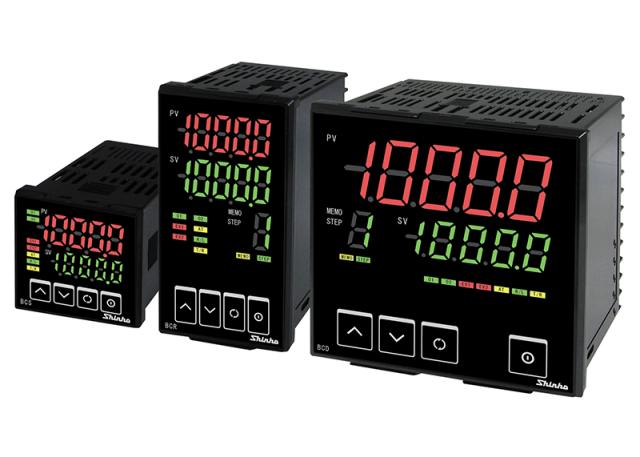
Digital Indicating Controllers (BCx2 Series)
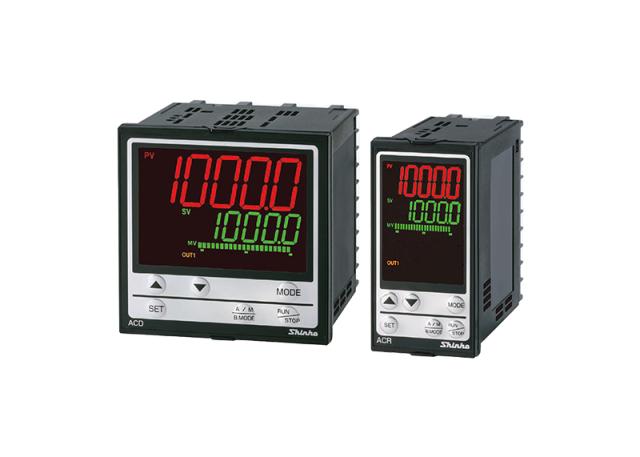
ON/OFF SERVO Digital Indicating Controllers, ACD-15A, ACR-15A
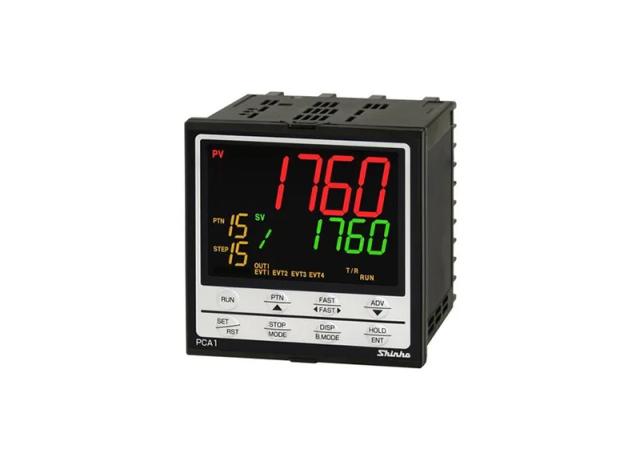
Programmable Controller | PCA1
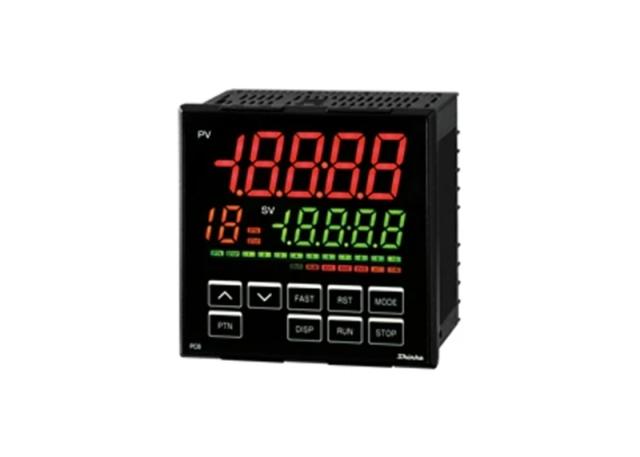
Programmable Controller | PCB1
Selection guide
Process & Temperature Controllers Guide
How to choose a process controller
Start with the loop's job, then narrow by input, output and panel format.
- Input signal: thermocouple, RTD, mA or V. The Pixsys ATR124 accepts all of these on one universal input; Shinko models are ordered for a specific input.
- Output: relay, SSR, current or servo. For motorised valves specifically, choose the Shinko ACD-15A or ACR-15A ON/OFF servo controllers rather than a standard relay or SSR output model.
- Control style: for a single fixed set point, use a process PID controller. For a multi-stage heat, hold and cool sequence, such as a heat-treatment furnace, use a profile controller instead.
- Panel format: 48 × 48 mm panel mount suits an operator-facing panel; DIN-rail suits control cabinets where settings come from a PLC or HMI rather than local keys.
- Communication: if the loop needs to be read or set from a PLC or SCADA, choose a model with Modbus, such as the Shinko DCL-33A or the Pixsys ATR124 with its optional isolated RS485.
What sits outside this page
- Multiple loops: for several loops run from one compact unit instead of many single-loop controllers, see multi-loop PID controllers.
- Display only: for a display without control action, see panel meters.
Getting the loop right first time
A controller is only as good as its sensor and output.
- Input match: confirm the input type and range match your sensor before ordering, since a controller set up for a thermocouple won't read an RTD correctly without reconfiguration.
- Output rating: check the output rating against your heater, contactor or valve current, since an SSR output driving a contactor coil needs a suppressor and a relay output switching a heater needs a rating check against inrush current, not just running load.
- Ordering info: tell us the input, the output device and the panel cutout, and we'll confirm the right model.
FAQ
Common questions
What is PID control?
A control method that adjusts the output based on the current error, how long it has lasted and how fast it is changing, using proportional, integral and derivative terms. The controller keeps recalculating this as the process runs, so it settles at the set point without excessive overshoot or long-term drift.
What is auto-tuning on a process controller?
The controller runs a test on the process, usually a step change in output, and calculates its own PID settings from how the process responds. This saves the manual trial-and-error tuning an engineer would otherwise need to do, and several Shinko models run it automatically the first time they power up.
Do your process controllers support Modbus?
Many do. The Shinko DCL-33A offers Modbus as an option on its DIN-rail body, and the Pixsys ATR124 has an optional isolated RS485. Check the specific model page before ordering, since not every controller in the range carries a communication option as standard.
Should I choose a panel-mount or DIN-rail controller?
Choose panel mount, typically 48 by 48 mm, when an operator needs to read and adjust the set point at the panel itself. Choose DIN-rail when the loop is set and monitored from a PLC or HMI instead, since it saves panel door space and doesn't need front-panel keys.
What is the difference between a PID controller and a profile controller?
A PID controller holds one fixed set point. A profile controller runs a programmed sequence of ramp, soak and cooling steps automatically, repeating the same temperature program every batch. Use a profile controller for heat treatment, curing or kiln processes that must follow a multi-stage schedule rather than sit at one temperature.
Need help?
Can't find what you need?
Our team helps you select the right control products for your application. Request a quote or discuss your requirements.
Expert product guidance
Tailored selection of control instruments
Custom solutions
Instruments customized for your specific industrial setup
Trusted global brands
Full warranty and official documentation support