Category
RTD Temperature Probes
Industrial, sanitary and HVAC RTD probes, from terminal-head Pt100 assemblies to Tri-Clover and building sensors.
An RTD temperature probe measures temperature from the change in a platinum sensor's electrical resistance, giving stable, repeatable readings up to a few hundred °C. This page covers industrial Pt100 and Pt1000 terminal-head assemblies in 3-wire and 4-wire, simplex and duplex versions, sanitary Tri-Clover probes for food and pharma, and Produal Pt1000 sensors for HVAC ducts, rooms and pipework.
12 Products · RTD Temperature Probes
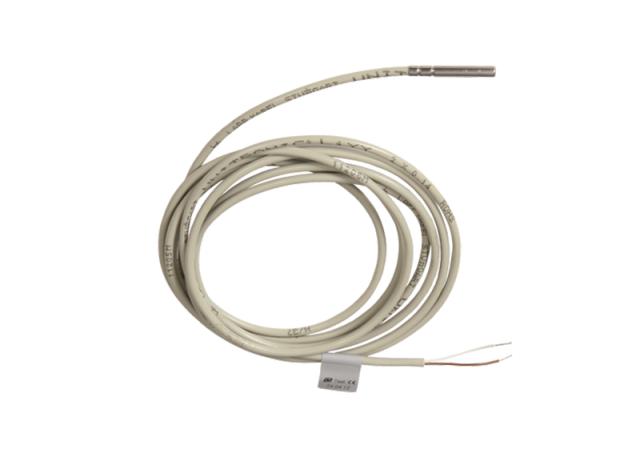
Cable Temperature Sensor - TEKY4
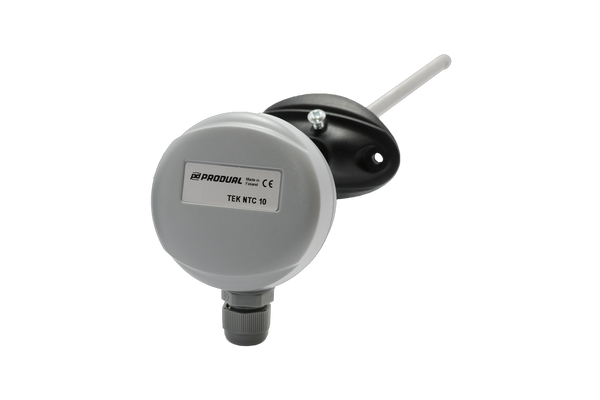
Duct Temperature Sensor TEK
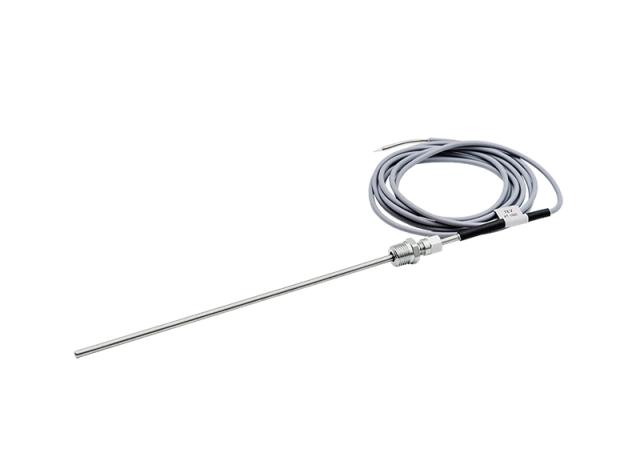
Frost Guard Temperature Sensor - TEV

Immersion Temperature Sensor TEAT

Immersion Temperature Sensor TENA

Outdoor Temperature Sensor TEU
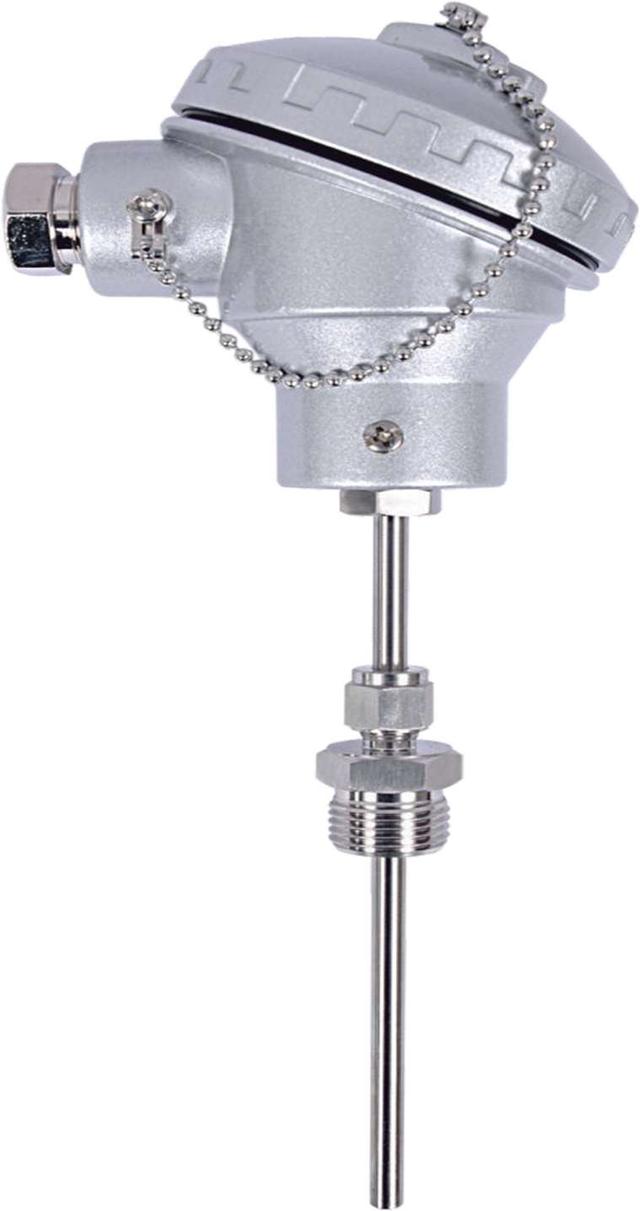
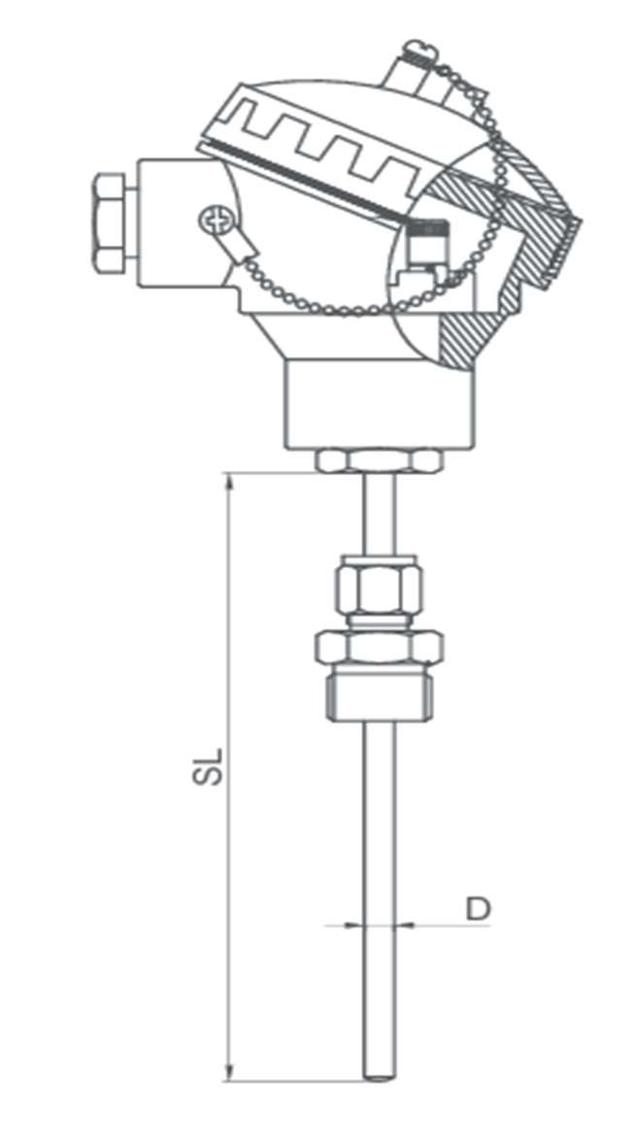
Regular RTD
RTDs with Terminal Head and Conventional Assemblies

Room Temperature Sensor RS - PT 1000

Room Temperature Sensor TEHR
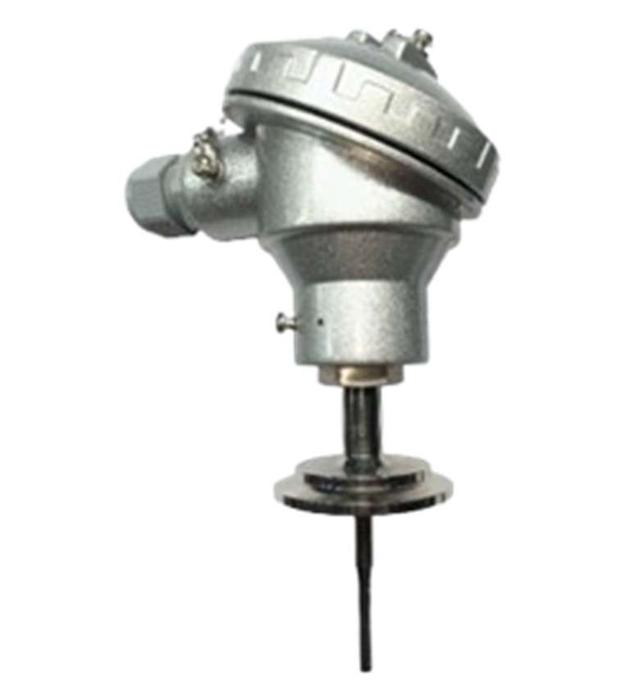
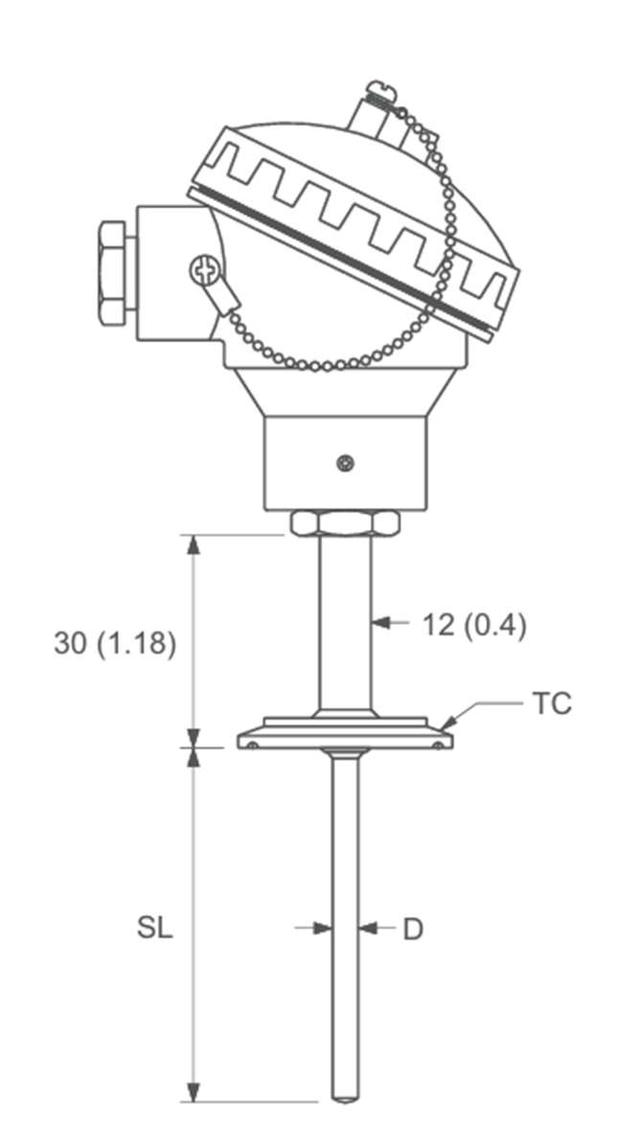
Sanitary RTD
Sanitary RTDs with Tri-Clover Connection and Weatherproof Terminal Head

Strap-on Temperature Sensor

Strap-on Temperature Sensor TEPK
Selection guide
RTD Temperature Probes Guide
How an RTD temperature probe works
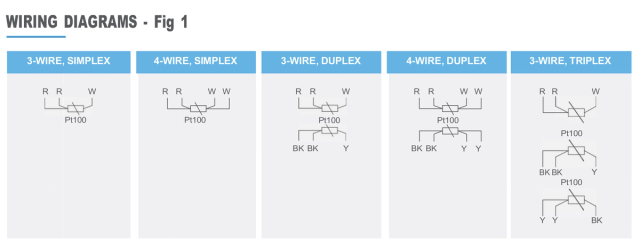
A platinum element's resistance rises predictably with temperature: 100 Ω at 0 °C for a Pt100, 1000 Ω for a Pt1000, and the instrument measures that resistance and converts it to a reading. A Pt1000's higher resistance reduces the effect of cable resistance over a long run, needing less compensation than a Pt100. 3-wire wiring compensates for most cable resistance for most installations, while 4-wire removes it completely for the highest accuracy.
How to choose an RTD temperature probe
- Element: Pt100 for short cable runs and standard accuracy, Pt1000 when the transmitter or PLC is far from the sensor.
- Wiring: 3-wire for most process work, 4-wire where cable length would otherwise skew the reading.
- Sheath: industrial terminal-head assemblies use an SS316L sheath rated -50 to 250 °C, for most process and OEM work.
- Hygienic connection: sanitary probes use a 1.5" Tri-Clover (TC50) clamp for clean-in-place, a weatherproof IP67 head and Class A accuracy, for food, beverage, dairy and pharma.
- Output: take the raw RTD signal to your own transmitter, or specify an isolated or non-isolated head transmitter for a 4 to 20 mA loop.
- Calibration: ask for NABL-calibrated probes where the reading needs to be traceable, or non-NABL for routine use.
- Building sensors: Produal's Pt1000 range covers immersion, duct, room, outdoor, strap-on, cable and frost-guard versions for HVAC, typically ±0.3 °C at 0 °C.
Need the signal converted to a 4 to 20 mA loop in the field or on a DIN rail? See temperature transmitters.
FAQ
Common questions
What is the difference between a Pt100 and a Pt1000 RTD?
Both are platinum RTDs, named for their resistance at 0 °C: 100 Ω for a Pt100 and 1000 Ω for a Pt1000. The Pt1000's higher resistance makes the reading less sensitive to the cable's own resistance, so it suits longer cable runs. A Pt100 works well for shorter runs and is the more common industrial choice.
What is the difference between a 3-wire and 4-wire RTD?
A 3-wire connection compensates for most of the cable's resistance and is accurate enough for most installations. A 4-wire connection removes cable resistance from the measurement completely, giving the highest accuracy. Choose 4-wire for calibration references or long cable runs where every fraction of a degree matters.
What temperature range does an RTD probe cover?
Our industrial RTDs, with SS316L sheaths and terminal heads, are rated -50 to 250 °C, which covers most process and utility duties. RTDs generally suit accurate, stable measurement up to a few hundred °C. For higher temperatures, a thermocouple or an infrared sensor is the better choice.
Do you supply sanitary RTD probes for food and pharma?
Yes. Our sanitary RTD uses a 1.5" Tri-Clover (TC50) clamp connection for clean-in-place systems, with a weatherproof IP67 head and Class A accuracy. It suits food, beverage, dairy, pharma and biotech processes where the probe has to be removed and cleaned regularly without breaking hygiene.
Which RTD probe suits an HVAC duct or room?
Produal's Pt1000 sensors are built for buildings: the TEK for ducts, TEHR and RS-PT1000 for rooms, TEU for outdoor air, TEPK for strap-on pipe mounting, TEKY4 for tight spaces and TEV for frost protection. Each is a simple, fixed sensor rather than a configurable industrial assembly.
Can you supply NABL-calibrated RTD probes?
Yes. Our industrial RTDs are available with NABL-calibrated certificates for traceable readings, or non-NABL calibration for routine use where a national accreditation isn't required. Tell us which your quality system needs and we'll supply the matching certificate with the probe.
Need help?
Can't find what you need?
Our team helps you select the right rtd temperature probes products for your application. Request a quote or discuss your requirements.
Expert product guidance
Tailored selection of rtd temperature probes instruments
Custom solutions
Instruments customized for your specific industrial setup
Trusted global brands
Full warranty and official documentation support