Category
HVAC Passive Temperature Sensors
Passive temperature sensors that connect straight to your BMS controller, for rooms, ducts, pipes and outdoors.
A passive temperature sensor is a resistor, usually a Pt1000, wired straight into a controller's resistance input with no power supply or electronics of its own. Produal offers Pt1000 versions for rooms, ducts, outdoors, cable-mounted awkward spots, and chilled or hot water pipes, all to EN 60751 class B, typically ±0.3 °C accurate at 0 °C.
10 Products · Passive Sensors
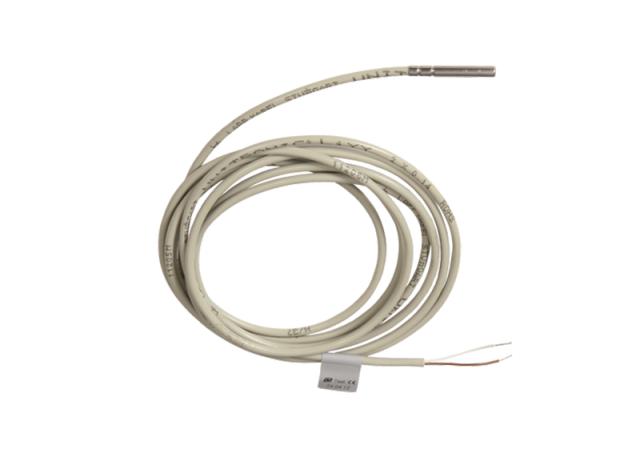
Cable Temperature Sensor - TEKY4
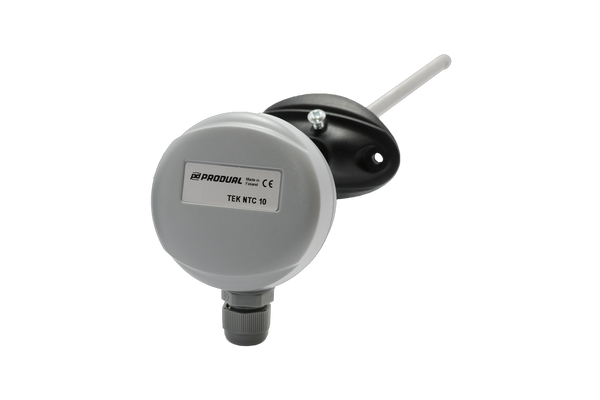
Duct Temperature Sensor TEK
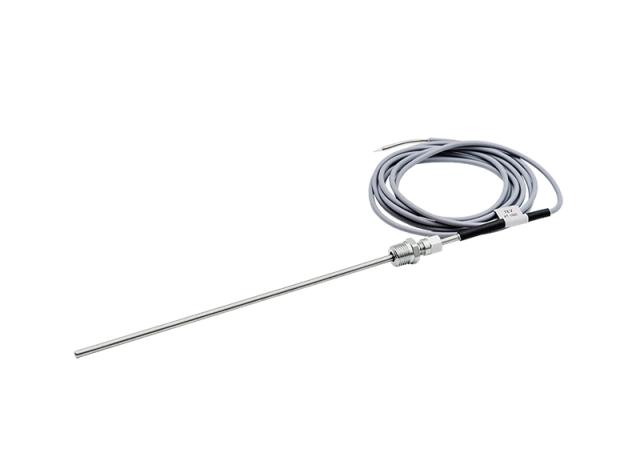
Frost Guard Temperature Sensor - TEV

Immersion Temperature Sensor TEAT

Immersion Temperature Sensor TENA

Outdoor Temperature Sensor TEU

Room Temperature Sensor RS - PT 1000

Room Temperature Sensor TEHR

Strap-on Temperature Sensor

Strap-on Temperature Sensor TEPK
Selection guide
HVAC Passive Temperature Sensors Guide
How a passive Pt1000 sensor works
The element's electrical resistance rises predictably with temperature: 1000 Ω at 0 °C, to EN 60751 class B. The controller measures that resistance directly on its input and converts it to a temperature reading in software. There's no local power, signal conditioning or calibration adjustment in the sensor itself, which keeps it simple and reliable, but it also means the cable run and connections must be good, since any added resistance reads as extra temperature.
How to choose a passive sensor location
- Room: room temperature sensors such as the TEHR (0 to 50 °C) or RS-PT1000 (-30 to 70 °C), wall-mounted.
- Duct: the duct temperature sensor TEK, -50 to 70 °C, for supply and return air.
- Outdoor: the outdoor temperature sensor TEU, -50 to 50 °C, for weather compensation.
- Tight spaces: the cable temperature sensor TEKY4, IP67, on a flexible cable for cold rooms and equipment interiors.
- Water and pipes: water temperature sensors, immersion, strap-on or frost-guard, for chilled and hot water.
- Cable length: as a rule of thumb, keep passive sensor runs under 30 to 50 m; beyond that, cable resistance starts to bias the reading, and a transmitter is the better choice.
Passive sensor or transmitter?
- Passive sensor: choose one when the controller has a matching resistance input and the cable run is short. It's the lower-cost option, with no electronics to fail and nothing to power.
- Transmitter: choose one, with a 4 to 20 mA or 0 to 10 V output, when the run is long, the environment is electrically noisy, or the controller only accepts an analogue or bus signal.
- Direct equivalents: several models on this page, including the TEK, TEU, TEAT and TEKY4, have a direct transmitter equivalent for exactly this reason.
When the cable is longer or the controller only takes 4 to 20 mA or 0 to 10 V, use the equivalent transmitter version instead, listed under HVAC temperature transmitters.
FAQ
Common questions
What is a Pt1000 temperature sensor?
It's a platinum resistance element with 1000 Ω of resistance at 0 °C, rising predictably with temperature to EN 60751 class B tolerance. Compared with the more common Pt100, its higher base resistance makes it less sensitive to the resistance added by long connecting cables, which is why it's widely used for BMS field sensors.
Do passive temperature sensors need a power supply?
No. The BMS controller applies a small measuring current and reads the element's resistance directly on its input, so the sensor itself needs no separate wiring for power. This keeps installation to a single two-wire run from sensor to controller.
How accurate is a Produal Pt1000 sensor?
Typically plus or minus 0.3 °C at 0 °C, to EN 60751 class B, across the room, duct, outdoor and water versions on this page. Accuracy at other temperatures follows the class B tolerance band, which widens slightly away from 0 °C.
When should I use a transmitter instead of a passive sensor?
Choose a transmitter when the cable run to the controller is long, typically beyond 30 to 50 metres, since cable resistance then starts to bias a passive reading. Also choose a transmitter if the controller only accepts a 4 to 20 mA or 0 to 10 V signal rather than a resistance input.
NTC or Pt1000 for a BMS sensor?
Pt1000 is the more common choice across this range because its resistance-temperature relationship is standardised to EN 60751 and interchangeable between suppliers. Some controllers, including the Proxima CU control unit, also accept NTC10 inputs, so check which element type your controller expects before ordering.
Need help?
Can't find what you need?
Our team helps you select the right passive sensors products for your application. Request a quote or discuss your requirements.
Expert product guidance
Tailored selection of passive sensors instruments
Custom solutions
Instruments customized for your specific industrial setup
Trusted global brands
Full warranty and official documentation support