Category
HVAC Room Temperature Sensors
Discreet wall-mounted temperature sensors for offices, hotels and hospitals.
A room temperature sensor tells the BMS how warm or cool a space actually is, so heating and cooling respond to the room instead of a guess. Produal offers the TEHR, a Pt1000 sensor for 0 to 50 °C, and the RS-PT1000 for -30 to 70 °C, both ±0.3 °C accurate at 0 °C, for surface or flush-box mounting.
2 Products · Room Temperature Sensors
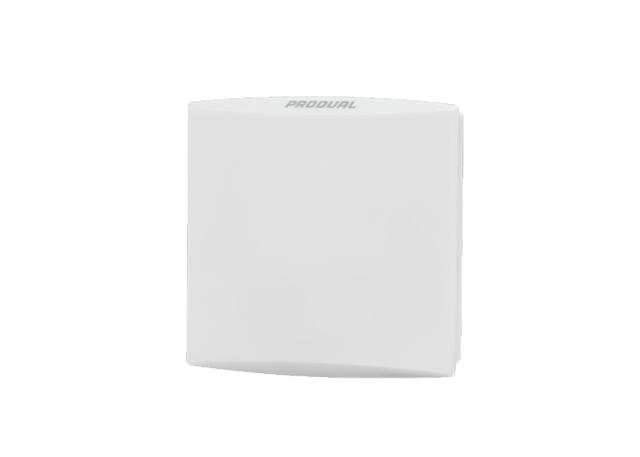
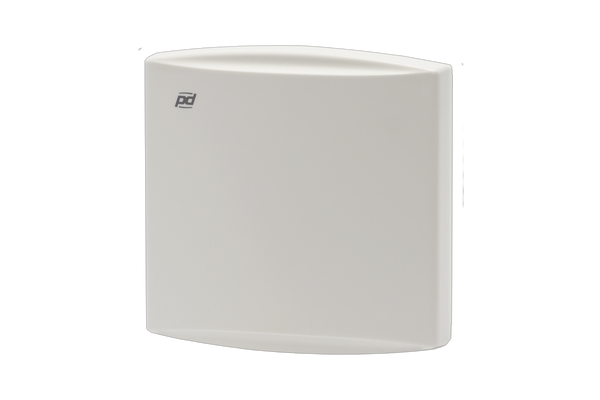
Selection guide
HVAC Room Temperature Sensors Guide
How a room temperature sensor works
A Pt1000 element behind the wall plate changes resistance with temperature. The BMS controller reads that resistance directly on its input and converts it to a room temperature, with no local power or electronics needed at the sensor itself. Because it's reading the air right at the wall, correct positioning matters more than for a duct sensor buried in a moving airstream.
How to choose and install a room temperature sensor
- Range: choose the TEHR for a standard 0 to 50 °C office or hotel room, or the RS-PT1000 where a wider -30 to 70 °C range or a more modern housing style is wanted.
- Mounting: both fit a surface box or a standard flush-mounting box, so you can match the installation to existing wall boxes or a fresh fit-out.
- Position: mount on an inside wall at about 1.5 m, where it sees the room's typical temperature rather than a corner or draught.
- Clearances: keep it away from direct sun, radiators, lights and supply air diffusers, all of which create a local hot or cold spot that isn't representative of the room.
- Sealing: seal the cable entry so air from inside the wall cavity, which can be a different temperature to the room, doesn't leak past the sensor and bias the reading.
For a room sensor that also gives CO2, humidity or a display, see HVAC temperature transmitters. For an industrial RTD probe rather than a wall sensor, see RTD temperature probes.
FAQ
Common questions
Where should a room temperature sensor be mounted?
On an inside wall at about 1.5 metres height, in a position that represents the room's general temperature rather than a corner, doorway or draught. Keep it away from direct sun, radiators, lights and supply air diffusers, which all create a local reading that doesn't match the rest of the room.
Can a room temperature sensor be mounted on a flush box?
Yes. Both the Produal TEHR and RS-PT1000 fit either a surface-mounted enclosure or a standard flush-mounting box set into the wall, so the choice depends on whether conduit is already in place or the wall finish is exposed.
Which element do Produal room sensors use?
Both the TEHR and RS-PT1000 use a Pt1000 element, accurate to plus or minus 0.3 °C at 0 °C. The TEHR covers 0 to 50 °C, while the RS-PT1000 extends to -30 to 70 °C in a more modern plastic housing with a smooth snap-on cover.
Why seal the cable entry on a room sensor?
Without a seal, air from inside the wall cavity, which is often warmer or cooler than the room, can leak past the sensor body and bias the reading. Sealing the cable entry keeps the sensor reading the room air rather than the wall's internal temperature.
Does a room temperature sensor need its own power supply?
No. Both the TEHR and RS-PT1000 are passive Pt1000 sensors, so the BMS controller measures their resistance directly on a two-wire connection with no separate power wiring to the sensor. This keeps room sensor installation to a single cable back to the controller.
Need help?
Can't find what you need?
Our team helps you select the right room temperature sensors products for your application. Request a quote or discuss your requirements.
Expert product guidance
Tailored selection of room temperature sensors instruments
Custom solutions
Instruments customized for your specific industrial setup
Trusted global brands
Full warranty and official documentation support