Category
Hydrostatic Continuous Level Transmitter
Continuous level measurement for water tanks, sumps and cooling towers in buildings.
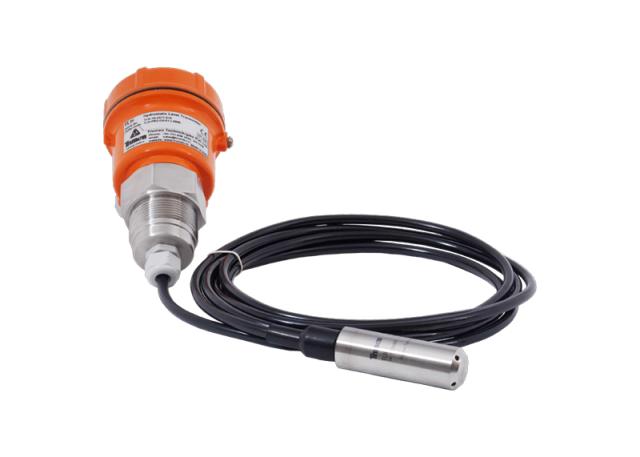
A hydrostatic level sensor for water tanks sits at the bottom of an overhead tank, sump or cooling tower basin and turns the water pressure above it into a continuous level reading for the BMS. The Trumen TLH covers 1 to 200 mH2O, with 4 to 20 mA, 0 to 10 V or Modbus output.
1 Product · Hydrostatic Continuous Level Transmitter
Selection guide
Hydrostatic Continuous Level Transmitter Guide
How a hydrostatic level sensor works
A silicon piezoresistive sensor sits at the tip of the probe, submerged near the tank bottom. It reads the pressure of the water column above it, which rises in direct proportion to depth, and a vented cable lets atmospheric pressure reach the back of the sensor so the reading isn't affected by weather. The transmitter converts that pressure into a level signal, typically in mH2O or metres.
How to choose a hydrostatic level sensor for water tanks
- Range: pick a range close to your tank's full depth, from 1 mH2O for shallow sumps up to 200 mH2O for deep boreholes and reservoirs.
- Accuracy: ±0.2% FSO suits process-critical tanks; ±0.5% FSO is adequate for routine level monitoring and pump control.
- Output: 4 to 20 mA or 0 to 10 V / 0 to 5 V for a standard BMS input, or RS485 Modbus to poll several tanks on one cable.
- Construction: 304 stainless steel housing with a 316L stainless steel diaphragm resists corrosion in raw or treated water.
- Cable: the vented cable must stay above the water line at the panel end, or moisture can enter the vent tube and skew the reading.
Hydrostatic transmitters suit tanks where a probe can be lowered in, including underground sumps a top-mounted ultrasonic sensor can't easily reach. For tank tops with no access for a submersible probe, see the ultrasonic level transmitter. For industrial wells and reservoirs, see hydrostatic level transmitters.
FAQ
Common questions
How is a hydrostatic level transmitter installed?
It's lowered on its cable to near the bottom of the tank or sump, or mounted at the tank base, so the sensor tip sits under the water and reads the pressure of the column above it. The vented cable then runs up to the panel, where it must stay dry and above the water line.
What range do I need for my tank?
Choose a range slightly larger than the tank's usable water depth, for example 0 to 5 mH2O for a 4 m tank, so the full depth sits comfortably within range without wasting resolution. The Trumen TLH covers 1 mH2O to 200 mH2O, so most building tanks and deep sumps are covered.
Can a hydrostatic transmitter connect to the BMS over Modbus?
Yes. The Trumen TLH offers an RS485 Modbus output alongside 4 to 20 mA, 0 to 10 V and 0 to 5 V, so it fits either a conventional analogue input card or a Modbus-polled BMS network without changing the sensor.
Hydrostatic or ultrasonic level transmitter, which is better for a water tank?
Hydrostatic suits tanks where you can lower a probe in, including sumps and underground tanks, and reads reliably even in turbulent or foaming water. Ultrasonic suits tanks you can only access from the top and where nothing should touch the liquid. Both give a continuous 4 to 20 mA reading for the BMS.
Does the transmitter work in a fire water tank?
Yes. The Trumen TLH's stainless steel construction and IP68 rating suit long-term submersion in fire water tanks, cooling tower basins and sumps, showing the level continuously on the BMS. It doesn't replace any level devices your fire regulations separately require.
Need help?
Can't find what you need?
Our team helps you select the right hydrostatic continuous level transmitter products for your application. Request a quote or discuss your requirements.
Expert product guidance
Tailored selection of hydrostatic continuous level transmitter instruments
Custom solutions
Instruments customized for your specific industrial setup
Trusted global brands
Full warranty and official documentation support